

Throughout the world a couple of concepts are considered common for the development of states and nations, indeed, education is one of them. We are living in a science and media-driven world where one cannot deny the importance of education. All developed nations give priority to the education sector to boost the capabilities of their human resource.
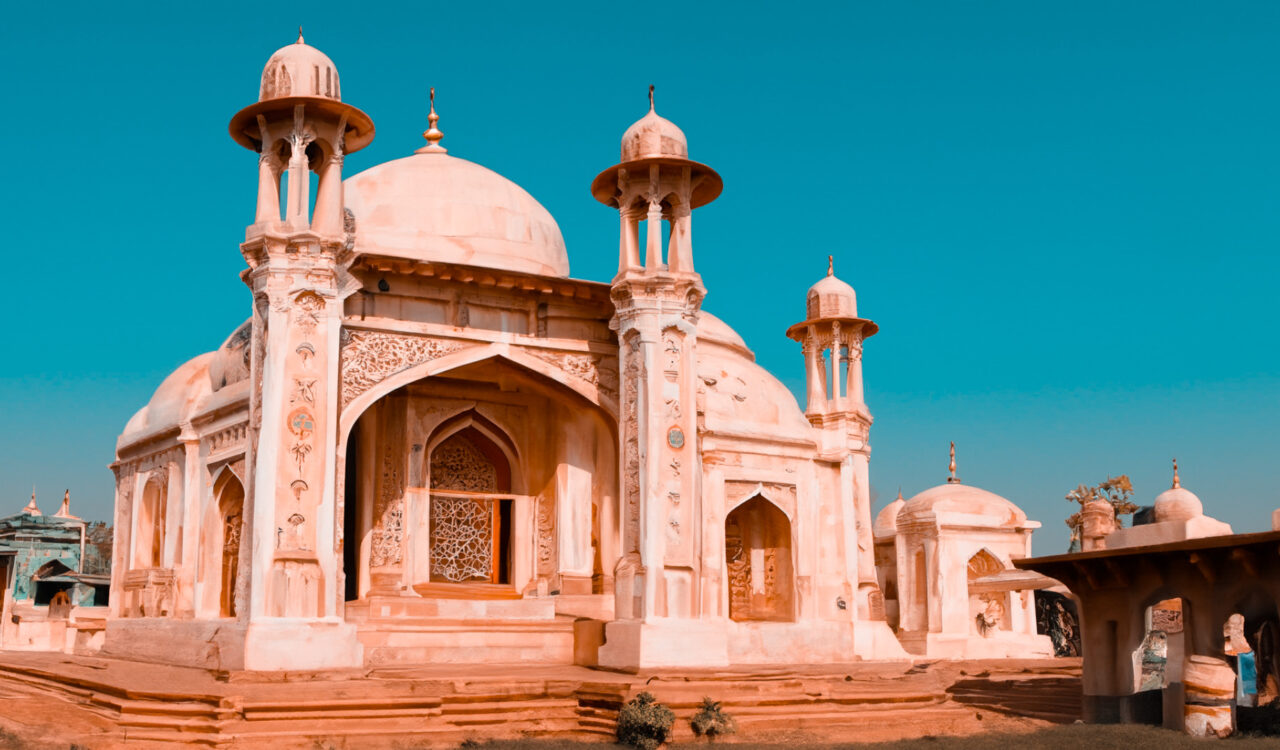
Pakistan is the 33rd largest country in the world by area, 5th largest nation, 7th declared atomic power, and 7th largest army on the planet Earth. It is considered an important country in South Asia due to its geographical and strategic location but, unfortunately, there are more than 35 thousand shrines but only 3 hundred universities in the corruption-hit country. This is the reason, according to the Institute for Health Metrics and Evaluation (IHME) at the University of Washington, Pakistan ranks 164th in the world for its investments in education and health care.
The poor condition of education in Pakistan is a long-standing problem and it is getting worse day by day. From time to time, this matter has been discussed at different political, governmental, administrative, and social platforms. The education system of the country, educational policies, and their review has also been a matter of long-spread dialogue in different eras. Revision of the educational system and education policies was a common factor during the different political regimes but no solid steps were ever taken to augment the size, scale, standard, and scope of education in the country.
After the Eighteenth Amendment in the Constitution of the Islamic Republic of Pakistan (2010), education is a fundamental right of every citizen. It is the responsibility of the state to provide free education to children between the ages of 5 and 16 years, but unfortunately, the state has failed miserably in carrying out its responsibility. According to official statistics, out of the country’s population (230 million), about 80 million are children between the ages of 5 and 16 who should be in school. About 2.5 million of these children are not getting their primary education, most of them are underprivileged children who never had the chance to go to school, and the rest are those who dropped out midway.
On the same topic, EAT News talked to Professor Mirza Khan, who said Pakistan is not one of those countries where the education sector is not given priority in terms of budget and funding. Although the Higher Education Commission and provincial and federal ministries are working to enhance the literacy rate still more rock-hard steps are needed to boost the level of quality education. “We have to discourage cramming because it is based on short-term memory. Students work hard to pass their exams but no modern knowledge is being learned, this is the reason we are a less innovative nation worldwide. We have to introduce more science-oriented subjects in our colleges and universities. Media can also play its role to sensitize the common people to raise their awareness level about education”, Dr. Mirza Khan was speaking to EAT News.
Another mega hurdle to increasing the literacy rate in the country is the traditional thoughts and folk society. As 67 percent of the total population of Pakistan lives in rural areas so the human resource is used for agriculture and other non-skilled labor activities. Moreover, people’s ideologies and beliefs are linked with Shrines (called Mazar in the local language). Many people believe that sacred personalities and saints are buried in shrines who have a strong connection with God.
Various factors contribute to the relatively small number of universities in Pakistan compared to a large number of shrines:
Historical and Cultural Factors: Pakistan boasts a rich cultural and religious heritage, with shrines holding immense cultural and spiritual significance for many individuals. Consequently, there has been a longstanding focus on the preservation and advancement of shrines, resulting in a higher quantity of shrines when compared to universities.
Resource Allocation: The allocation of resources plays a vital role in determining the number of universities. Due to limited financial resources and competing priorities, higher education has often received less investment compared to other sectors. As a consequence, the proportionally low number of universities in Pakistan can be attributed to this disparity in resource allocation, considering the country’s population.
Restricted Research Culture: Establishing a strong research culture necessitates the cultivation of a research-oriented mindset among students, faculty, and institutions. Insufficient emphasis on research within the education system and limited incentives for conducting research can contribute to a weakened research culture.
Collaboration and Connections: Research flourishes in an environment where collaboration and connections between academia, industry, and the government are fostered. Limited collaboration and exchange of knowledge among these sectors can hinder research progress in Pakistan.
Brain Drain: The phenomenon of talented researchers emigrating to other countries in search of better opportunities, commonly referred to as brain drain, has had a detrimental impact on the research field in Pakistan. The departure of skilled researchers hinders the development of a robust research ecosystem and restricts the transfer of knowledge and collaboration.
The government’s neglect of education has become established in these seventy-six years. Since the establishment of the country till now, education has never been spent or allocated more than three percent of the gross national product from the public exchequer, usually, this expenditure generally remained close to two percent of GDP in Pakistan.
To tackle these challenges, it is necessary to engage in long-term planning, enhance investment in research and development, establish institutions focused on research, implement capacity-building programs, and adopt measures to retain and attract skilled researchers.
A large number are flocking to the Eat News for quality news every day, and readers in Taiwan, United States, United Kingdom, India, Japan, France, Pakistan, China, Malaysia and more, now support us financially.
In these chaotic, perilous times, an independent, truth-seeking news organisation like the Eat News is essential. We believe everyone deserves access to trustworthy information. That’s why we choose to keep our reporting open for all readers, regardless of where they live or what they can afford to pay.
The Eat News has no shareholders or billionaire owner, meaning our journalism is free from influence and vested interests – this makes us different. Our editorial independence and autonomy allows us to provide fearless investigations and analysis of those with political and commercial power. We can give a voice to the oppressed and neglected, and help bring about a brighter, fairer future.
If there were ever a time to join us, it is now. You have the power to support us through these volatile economic times and enable our journalism to reach more people, in all countries.
Every contribution, however big or small, makes a difference. Support the Eat News for better reporting.
Support the Eat News ➔


