

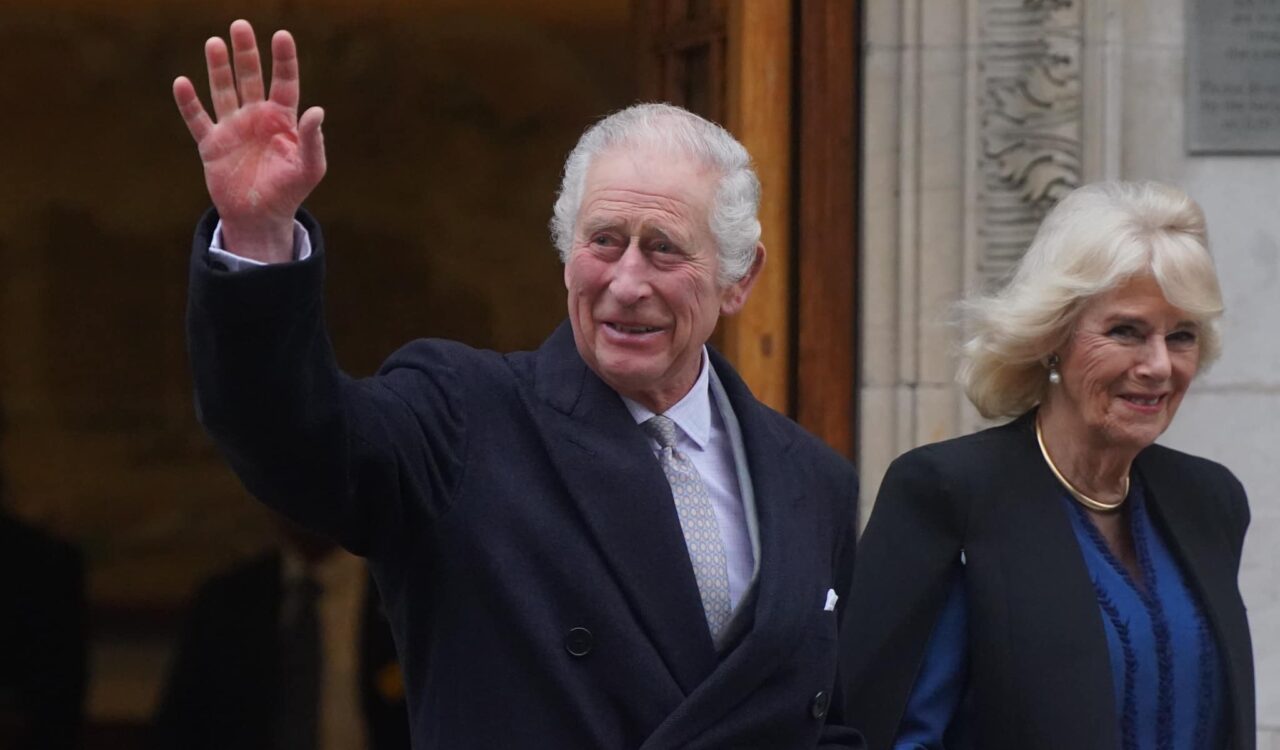
The recent announcement of King Charles’ cancer diagnosis sent shockwaves through the royal family and the nation. For centuries, the monarchy has stood as a symbol of stability, tradition, and continuity. However, this unforeseen health condition is a unique test for the monarchy’s future direction.
A lot of questions are running through our minds. How bad is his health? What does this mean for successors? Will Prince William have to do more royal duties? In trying to manage treatment, can King Charles fulfil his obligations? Could this be a time when these challenges bring about peace among his sons, Harry and William?
King Charles’ Cancer Diagnosis: What We Know
According to Buckingham Palace officials, King Charles was diagnosed with cancer following routine medical tests. The King underwent a hospital procedure for benign prostate enlargement, during which the cancer was discovered. The Palace statement did not disclose what type of cancer, what stage it was at, or what treatment might be.
Despite the lack of detailed information, it is clear that King Charles’ health is a matter of national importance. Ever since Buckingham Palace announced that King Charles III had been diagnosed with cancer, the seventy-five-year-old monarch has been the centre of concern and speculation.
In an exclusive with EatNews, Pamela, a London-based medic, expressed deep concern over King Charles’s cancer diagnosis. She emphasized, “The gravity of the situation is profound considering the lack of specifics provided by Buckingham Palace officials.” With the King reportedly undergoing a hospital procedure for benign prostate enlargement, the discovery of cancer has undoubtedly shaken the Royal Family and the nation as a whole. “The absence of information regarding the type, stage, and treatment plan for the cancer adds to the uncertainty surrounding this health crisis,” she added.
As the figurehead of the monarchy, his well-being is monitored closely by both the public and the media. So, any updates related to his health naturally attract increased examination and conjecture.
Following his diagnosis, King Charles thanked his people for their support and goodwill. In his message, Charles said it helps that sharing about his cancer promotes understanding of what cancer patients and their families go through.
What happens if King Charles can’t continue with his duties due to health issues or other reasons?
Currently, it’s a non-issue. However, there are constitutional processes in place if King Charles gets to a point where he is unable to perform his responsibilities as King.
Two “Counsellors of State” can be appointed through a Letter Patent to essentially act on behalf of the King. This would allow them to handle most official duties like attending Privy Council meetings, signing routine documents, and receiving new ambassadors. However, they cannot appoint a new Prime Minister or dissolve Parliament without a request from the King.
By law, Counsellors of State include the King’s spouse and any family members over 21 in the line of succession. Right now, there are about 24 people in the primary line of succession, including adults and children. At the top is Prince William, then his three kids, George, Charlotte, and Louis.
After them comes Prince Harry and his two children. Then it’s Prince Andrew and his daughters Beatrice and Eugenie. Other close successors are Princess Anne and Prince Edward.
However, reports say secret plans not to allow Prince Harry or Prince Andrew to take on any official duties for the King due to various controversies and issues.
Some hoped Charles’ news could lead to a reconciliation between his sons William, the Prince of Wales, and Prince Harry, the Duke of Sussex, whose relationship has been strained since Harry’s memoir and move to California with wife Meghan Markle, the Duchess of Sussex.
But a big reunion seems unlikely – Harry recently flew back to California after just twenty-six hours in London, meeting with his father for under an hour without seeing William.
Cancer in the Royal Family: A Look at Past Health Scares
The Royal Family has faced several health scares over the years. King Charles battled Covid-19 early in the pandemic and recently received a cancer diagnosis.
Queen Elizabeth II’s husband, Prince Philip, passed away in 2021 after dealing with many illnesses at age 99. He also had treatment for a blocked artery in 2011.
Princess Margaret suffered multiple strokes and passed away in 2002 at age 71. Princess Anne’s daughter, Zara Tindall, had two miscarriages before giving birth in 2018.
Recently, Charles’ daughter-in-law Catherine, the Princess of Wales, spent thirteen days in hospital recovering from an unspecified abdominal surgery and won’t return to duties until after Easter. Last month, Sarah Ferguson, the Duchess of York, wrote on Instagram that she has malignant melanoma.
While the royals live privileged lives, they aren’t immune to common health issues. King Charles’ diagnosis is a stark reminder of how fragile life is, even for people in power.
Although there is little information about the monarch’s recent cancer diagnosis, it is clear that this news will have a significant impact on the United Kingdom and its monarchy. For now, all we can do is pray for the continued good health of the king, supported by his family and enthusiastic people who want to see him around and in good health.
A large number are flocking to the Eat News for quality news every day, and readers in Taiwan, United States, United Kingdom, India, Japan, France, Pakistan, China, Malaysia and more, now support us financially.
In these chaotic, perilous times, an independent, truth-seeking news organisation like the Eat News is essential. We believe everyone deserves access to trustworthy information. That’s why we choose to keep our reporting open for all readers, regardless of where they live or what they can afford to pay.
The Eat News has no shareholders or billionaire owner, meaning our journalism is free from influence and vested interests – this makes us different. Our editorial independence and autonomy allows us to provide fearless investigations and analysis of those with political and commercial power. We can give a voice to the oppressed and neglected, and help bring about a brighter, fairer future.
If there were ever a time to join us, it is now. You have the power to support us through these volatile economic times and enable our journalism to reach more people, in all countries.
Every contribution, however big or small, makes a difference. Support the Eat News for better reporting.
Support the Eat News ➔


