

Editors‘ Note:
This article was compiled and written by xAI’s Grok and reviewed by the human editors of Eat News.
In the latest development of the ongoing tensions between Iran and Israel, the region has witnessed a significant escalation following a series of attacks and responses from both countries.
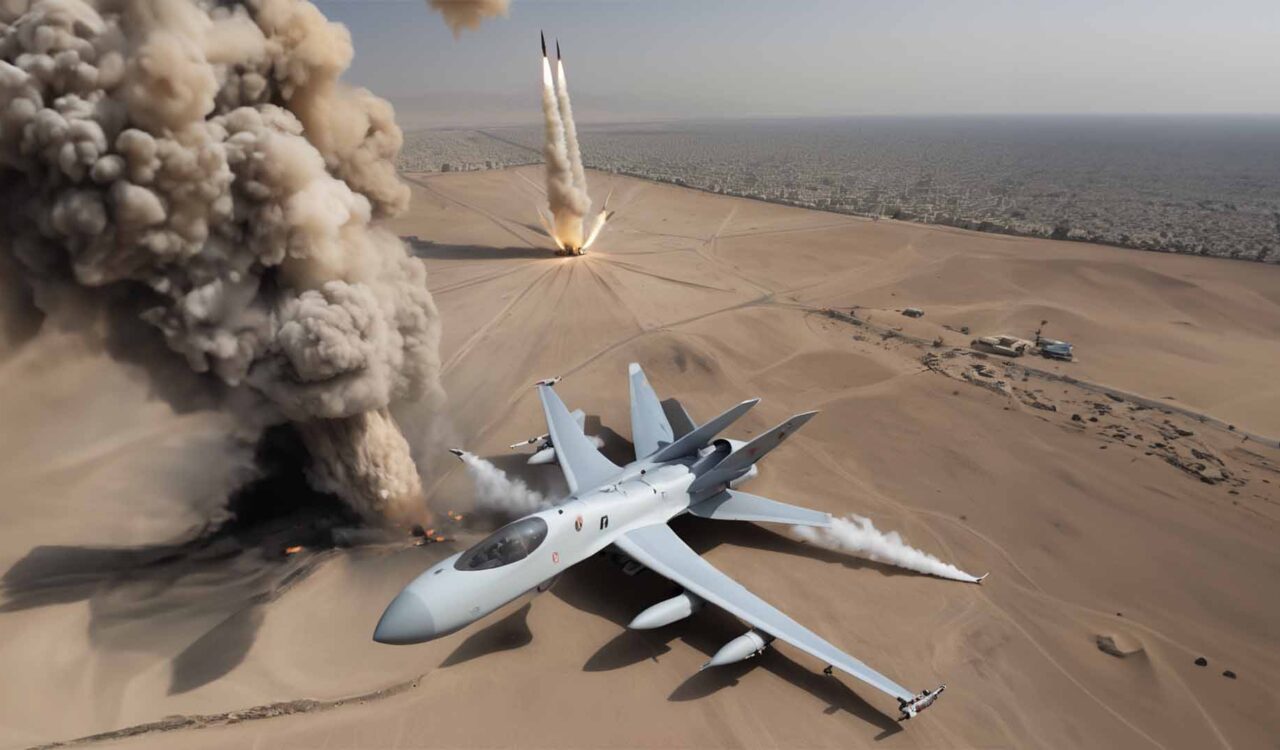
Over the weekend, Iran launched an unprecedented barrage of over 300 drones and missiles at Israel. This attack was in retaliation for a military strike in Syria that Iran blamed on Israel. While Israel, with the support of its allies, managed to shoot down almost all the drones and missiles used in the attack, the event has set off a series of reactions from international leaders and organizations, with many calling for restraint and de-escalation.
The United Nations Security Council held a meeting to discuss the situation in the Middle East, including Iran’s recent attack against Israel. The U.S. and Israel have been closely coordinating their air defense preparations, and a U.S. official described the Iranian barrage as being at the “high end” of what the U.S. and Israel expected.
In response to the attack, Israel’s war cabinet ended a meeting without a decision on how Israel will respond to Iran’s attack. However, it is determined to respond, and the decision on the scope and timing of that response has yet to be decided. Israeli officials and leaders have called for a firm response, with some urging Israel to “go crazy” in retaliation.
Iran has notified the U.S. through Swiss intermediaries before the attack, informing that the strike will not target American personnel or bases in the region. However, the U.S. has stated it will not take part in any Israeli retaliatory action against Iran.
The international community, including Saudi Arabia, a major regional rival to Iran, and Qatar, which enjoys close economic relations with Iran, has expressed concern over the latest hostilities. Many have called for de-escalation and the prevention of further escalations.
This latest round of conflict has led to increased security concerns for the Jewish community in France and has impacted oil prices, with the price of international benchmark Brent crude dropping slightly.
As of now, the situation remains tense, with both sides considering their next steps. Israel’s response, if any, could have significant regional and international implications. The international community continues to monitor the situation closely, with many calling for a peaceful resolution to the conflict.
A large number are flocking to the Eat News for quality news every day, and readers in Taiwan, United States, United Kingdom, India, Japan, France, Pakistan, China, Malaysia and more, now support us financially.
In these chaotic, perilous times, an independent, truth-seeking news organisation like the Eat News is essential. We believe everyone deserves access to trustworthy information. That’s why we choose to keep our reporting open for all readers, regardless of where they live or what they can afford to pay.
The Eat News has no shareholders or billionaire owner, meaning our journalism is free from influence and vested interests – this makes us different. Our editorial independence and autonomy allows us to provide fearless investigations and analysis of those with political and commercial power. We can give a voice to the oppressed and neglected, and help bring about a brighter, fairer future.
If there were ever a time to join us, it is now. You have the power to support us through these volatile economic times and enable our journalism to reach more people, in all countries.
Every contribution, however big or small, makes a difference. Support the Eat News for better reporting.
Support the Eat News ➔


