

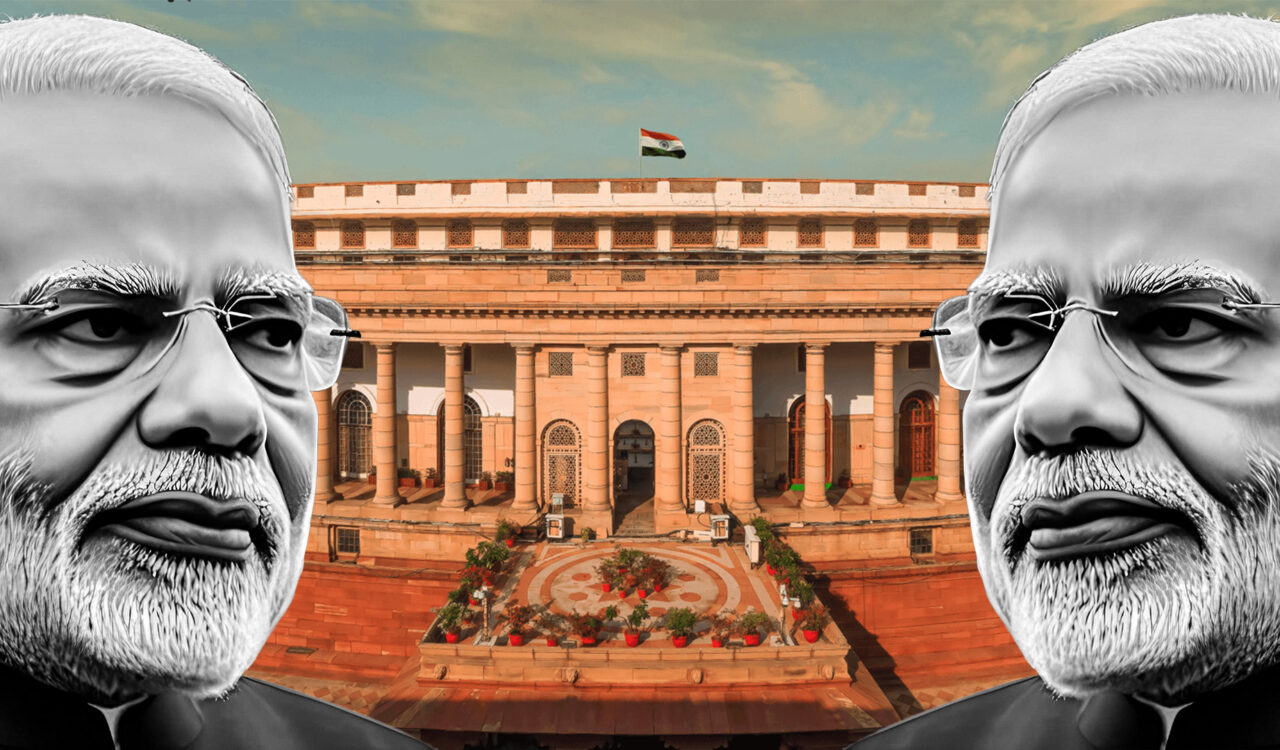
Indian Prime Minister Narendra Modi inaugurated new building of Parliament on 28th May. ‘It will witness developed India’s completed resolutions’, he said. The formal celebration was attended by various leaders, chief ministers including the oppositions. Ceremony began with prayers, Prime Minister bowed in front of sengol that was later placed next to the chair of Lok Sabha in the parliament. It is a gold plated wand signifying authority and power. It also symbolizes history as it was first received by Prime Minister Jawaharlal Nehru. As per the reports, sengol considered as a symbol of transfer of power from British to India in 1947.
New building of parliament has prioritized number of facilities for ministers and other working members along with presenting Indian freedom struggle and country’s democratic spirit. Need for the new parliament building occurred after problems such as narrow seating space, distressed infrastructure, obsolete communication structure, safety concerns and inadequate workspace. The number of seats also alerted present administration to work towards it as Lok Sabha seats has remained unaltered since 1971, which is unlikely to change by 2026. Its triangular shape ensures optimum space utilization.
History expert Gaurav Kumar while discussing about new parliament also briefly mentioned about its significance in representing India globally. ‘This is one of the milestones for the country, its people and especially for current administration. We are looking at it with a very different perspective, and there is so much respect for the decisions and considerations made while designing it and including forgettable elements to this process’, he said. Furthermore, he also called the leaders who chose not to attend the ceremony as a ‘disrespectful’ gesture towards the history and Indian politics. Multiple controversies were swirling before this ceremony on who should inaugurate the new building, as per political parameters, which started a debate. According to some opposition parties President Droupadi Murmu would be an appropriate person to do this and decided to boycott the event. 20 Opposition parties avoided the ceremony and called it ‘assault on democracy’ whereas other 25 parties accepted the invitation for ‘in the true spirit of democracy’ and a ‘momentous occasion’.
Gaurav Kumar elaborated the new building and pointed out how it resembles history. He said, ‘A film of 9 minute and 26 seconds about parliament offered insightful details about the new building. Statues of majestic animals have been placed as doorkeepers like eagle (Garud), elephant (Gaj), horse (Ashva), crocodile (Maggar), swan (Hans) and mythological creature (Shardul). You see, each animal that has been given place is a symbol of nature and has a role in India’s mythological stories. It is also inspired by national bird peacock, feathers are carved on the walls and ceiling, complemented by teal carpets. Modern technology as it has become completely paperless inside with ample seating, a pendulum clock featuring Mahatma Gandhi, Chanakaya, Gargi, Sardar Vallabhbhai Patel, B R Ambedkar and the chariot wheel from the sun temple at Konark.’
The whole building treasured pieces of history in one way or the other and Sengol, that has not received the amount of respect and importance it deserved is placed where it should be, according to Kumar. After 1947, Sengol was kept for public display at Allahabad museum as a matter of public record, which Minister of Home Affairs Amit Shah objected strongly.
Old building of parliament was circular in shape designed by architects Herbert Baker and Sir Edwin Lutyens. Bimal Hasmukh Patel, aged 64 is an Indian architect, who designed the new building apart from few famous projects like Kashi Vishwanath Corridor and Sabarmati Riverfront project. Kumar mentioned this as an achievement and told EAT news, ‘Building a new structure under Indian hands and mind is a proud achievement for every Indian and for the politics. Parliament is a place where it all starts and ends. It is a sacred place for every political leader. This new establishment will represent India’s culture, history and development. It will showcase freedom struggle but also an epitome of India as a new developing country.’
President Droupadi Murmu welcomed new parliament and said, Prime Minister is a symbol of trust of Parliament and is happy for him in inaugurating this new building and that it is a proud moment for the country. Vice President Jagdeep Dhankhar said, ‘New parliament will help in maintaining political consensus and will become a symbol of getting rid from slave mentality. It will witness India’s development’.
According to Ministry of Housing and Urban affairs, ‘The power of Indian democratic system manifests in our parliament, which weathered the Indian freedom struggle from colonial rule and witnessed many historical milestones. Old building served as independent India’s first parliament and witnessed the adoption of the constitution of India. The building had to be modified to a large extent to suit the purpose of a modern parliament.’
A large number are flocking to the Eat News for quality news every day, and readers in Taiwan, United States, United Kingdom, India, Japan, France, Pakistan, China, Malaysia and more, now support us financially.
In these chaotic, perilous times, an independent, truth-seeking news organisation like the Eat News is essential. We believe everyone deserves access to trustworthy information. That’s why we choose to keep our reporting open for all readers, regardless of where they live or what they can afford to pay.
The Eat News has no shareholders or billionaire owner, meaning our journalism is free from influence and vested interests – this makes us different. Our editorial independence and autonomy allows us to provide fearless investigations and analysis of those with political and commercial power. We can give a voice to the oppressed and neglected, and help bring about a brighter, fairer future.
If there were ever a time to join us, it is now. You have the power to support us through these volatile economic times and enable our journalism to reach more people, in all countries.
Every contribution, however big or small, makes a difference. Support the Eat News for better reporting.
Support the Eat News ➔


