


Editors‘ Note:
This article was compiled and written by OpenAI’s ChatGPT Plus, Anthropic’s Claude AI and reviewed by the human editors of Eat News.
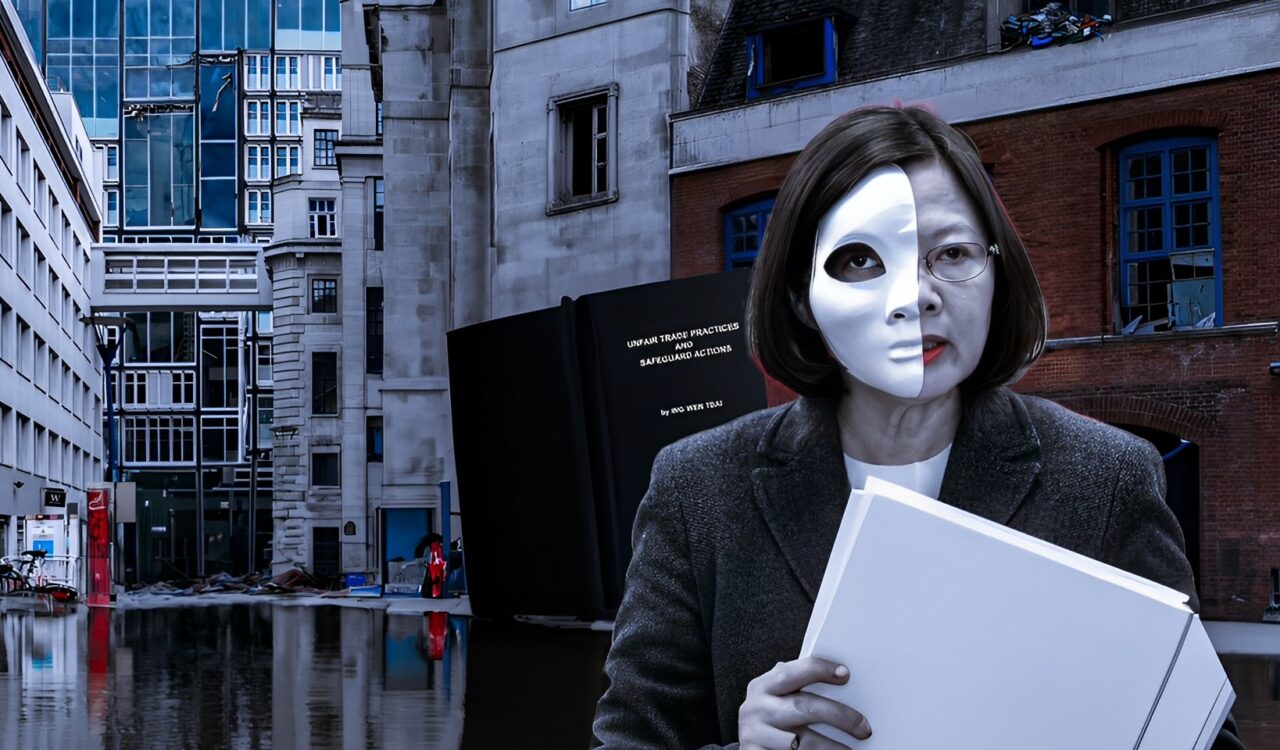
The credibility of Tsai Ing-wen, the president of the Republic of China, became a point of scrutiny in 2019 when questions arose regarding her doctoral degree from the London School of Economics (LSE). These questions were not new; they had first appeared in 2015 when Tsai was running for her initial term as President. LSE couldn’t locate her thesis at that time, inviting suspicions from opposition parties in Taiwan. As Tsai sought re-election in 2019, the issue resurfaced, prompting LSE to re-investigate and reaffirm the validity of her degree.
In June 2019, questions emerged surrounding the doctoral degree of Tsai Ing-wen, the President of Taiwan who was running for re-election. Tsai obtained her PhD in Law from the prestigious LSE in 1984, with a thesis titled “Unfair Trade Practices and Safeguard Actions.”
Her credentials first came under scrutiny in 2015 when she was campaigning for her first term as President. At the time, LSE could not locate a copy of her thesis in their records, sparking suspicions from opposition parties in Taiwan. The issue re-surfaced in June 2019 as Tsai sought re-election, prompting LSE to re-examine the case and reaffirm the validity of her degree.
This report investigates the controversy chronologically, based on internal LSE communications and public statements made by the university. It provides insights into how a leading global university handled sensitive queries regarding a high-profile alumna and head of state, balancing transparency, academic integrity, and data privacy.
The Initial Queries
On June 11, 2019, Clive Wilson, Enquiry Services Manager at LSE Library, emailed colleagues that the library had received three inquiries over the past two weeks regarding Tsai’s thesis.
Wilson explained that similar interest surfaced when Tsai first ran for President in 2015. At the time, extensive research was conducted, but neither LSE Library nor Senate House Library of the University of London (which handled LSE theses pre-1985) could locate a copy.
Wilson outlined the standard response for any queries:
“Thank you for your interest in this thesis. Unfortunately, LSE Library has never had a copy…All PhDs from that period were awarded under the University of London banner and would have been sent first to Senate House Library…We have been in correspondence with the University of London about the thesis and extensive checks have been made. Unfortunately Senate House are unable to find their copy.”
Seeking Clarity
On June 11, Nicola Wright, Head of Scholarly Communications, forwarded Wilson’s email to LSE’s press office and key executives, noting that with Taiwan’s presidential election upcoming in January 2020, Tsai’s thesis could become a high-profile issue.
The next day, LSE Deputy Director of PhD Academy Marcus Cerny emailed the Law Department seeking clarity on why Tsai’s thesis could not be located. Cerny indicated upcoming contact with the University of London, as academic oversight was handled by Senate House pre-1985 when LSE degrees were awarded under the University of London banner.
Cerny then emailed Ruth Orson, who had responded to thesis inquiries, stating records showed Tsai’s degree was correctly awarded in March 1984 and included in LSE’s 1985/86 Calendar. Cerny believed Tsai submitted one thesis copy to her supervisor, one to her external examiner, and one to the University of London. The University of London copy was likely catalogued, explaining its appearance in library databases. Cerny presumed the supervisor and examiner copies were not formally archived.
Escalating Scrutiny
On June 12, Charlotte Kelloway from LSE Media Relations emailed Clive Wilson suggesting they simply confirm Tsai was awarded her PhD in 1984, providing the calendar entry as proof, rather than repeating that the thesis cannot be found.
Kelloway explained this was discussed with Dr. Fang-long Shih from LSE’s Taiwan Research Programme, who was acting as an intermediary with the Office of the President of Taiwan. Shih warned that repeating the thesis is missing could invite further irrational attacks on Tsai in Taiwan.
Shih also requested adding the names of Tsai’s supervisor and examiners to LSE’s statement, noting “President Tsai Ing-wen has now given her consent for the school to the disclosure of personal information related to her PhD thesis.”
Meanwhile, Orson emailed concerned that her standard response to initial thesis inquiries was being used to question Tsai’s integrity in Taiwanese media. LSE Digital Communications began investigating removing Orson’s email address from public directories to prevent harassment.
LSE Issues Public Statement
On June 12, LSE issued its first public statement on the issue, confirming simply that records showed Tsai was correctly awarded a PhD in Law in 1984, providing the calendar entry as evidence. There was no mention of being unable to locate the thesis.
However, that day a Taiwanese outlet, Taiwan People’s News, ran a story with screenshots of Orson’s emails stating the thesis was missing. LSE formally requested a correction, asking the publication to use LSE’s official statement instead.
The story was updated with LSE’s statement, but still retained Orson’s name and original emails. Kelloway expressed concern that “Ruth is really quite upset her name has been made public.”
Seeking Resolution
On June 13, Kelloway contacted Taiwan People’s News again appealing for Orson’s name to be removed, as her communication was meant to be private.
At this point, LSE faced a dilemma. Should they reverse policy and release Tsai’s supervisor name to validate her degree, as critics claimed this was public information?
LSE doubled down on privacy, with Deputy Director of Legal, Risk & Compliance Rachael Maguire emailing Wilson that UK data protection law forbids releasing personal details like PhD supervisors without consent.
Behind the scenes, the President’s Office indicated to Shih they would mail LSE a copy of Tsai’s thesis. Shih lobbied LSE to just note the thesis was incoming, but not publish the full copy yet to prevent further speculation.
Tsai’s team also feared making the thesis accessible online “will not end the speculation but invite many more ‘irrational’ speculations from anti-Tsai’s camp.” They hoped LSE’s statement alone would defend Tsai’s academic credentials against partisan attacks.
The Aftermath
In subsequent weeks, feverish coverage in Taiwanese media slowly subsided. In July, Director Min Shafik replied to various inquiries that records showed Tsai was correctly awarded her PhD. Shafik steered clear of the thesis controversy, focusing only on the degree award process meeting LSE and University of London regulations at the time.
A large number are flocking to the Eat News for quality news every day, and readers in Taiwan, United States, United Kingdom, India, Japan, France, Pakistan, China, Malaysia and more, now support us financially.
In these chaotic, perilous times, an independent, truth-seeking news organisation like the Eat News is essential. We believe everyone deserves access to trustworthy information. That’s why we choose to keep our reporting open for all readers, regardless of where they live or what they can afford to pay.
The Eat News has no shareholders or billionaire owner, meaning our journalism is free from influence and vested interests – this makes us different. Our editorial independence and autonomy allows us to provide fearless investigations and analysis of those with political and commercial power. We can give a voice to the oppressed and neglected, and help bring about a brighter, fairer future.
If there were ever a time to join us, it is now. You have the power to support us through these volatile economic times and enable our journalism to reach more people, in all countries.
Every contribution, however big or small, makes a difference. Support the Eat News for better reporting.
Support the Eat News ➔


