

Editors‘ Note:
This article was compiled and written by OpenAI’s ChatGPT Plus and reviewed by the human editors of Eat News.
The nationality controversy surrounding Bi-khim Hsiao, the Democratic Progressive Party’s (DPP) candidate for Vice President, has once again sparked heated discussions, raising questions about her eligibility to run. Kuomintang (KMT) legislative candidate, Hsu Chiao-hsin, revealed additional evidence today, claiming that Bi-khim Hsiao had mentioned in her autobiography in 2004 that she only held U.S. citizenship before the age of 20, intensifying debates on her candidacy qualifications.
Hsu Chiao-hsin pointed out that in her autobiography from 2004, Bi-khim Hsiao explicitly stated that she only possessed U.S. citizenship before the age of 20, adding fuel to the fire of the nationality controversy. She questioned Bi-khim Hsiao’s understanding of her own nationality, both past and present, describing the contradictions in her statements. Hsu Chiao-hsin emphasized the need for a more transparent examination of Bi-khim Hsiao’s qualifications.
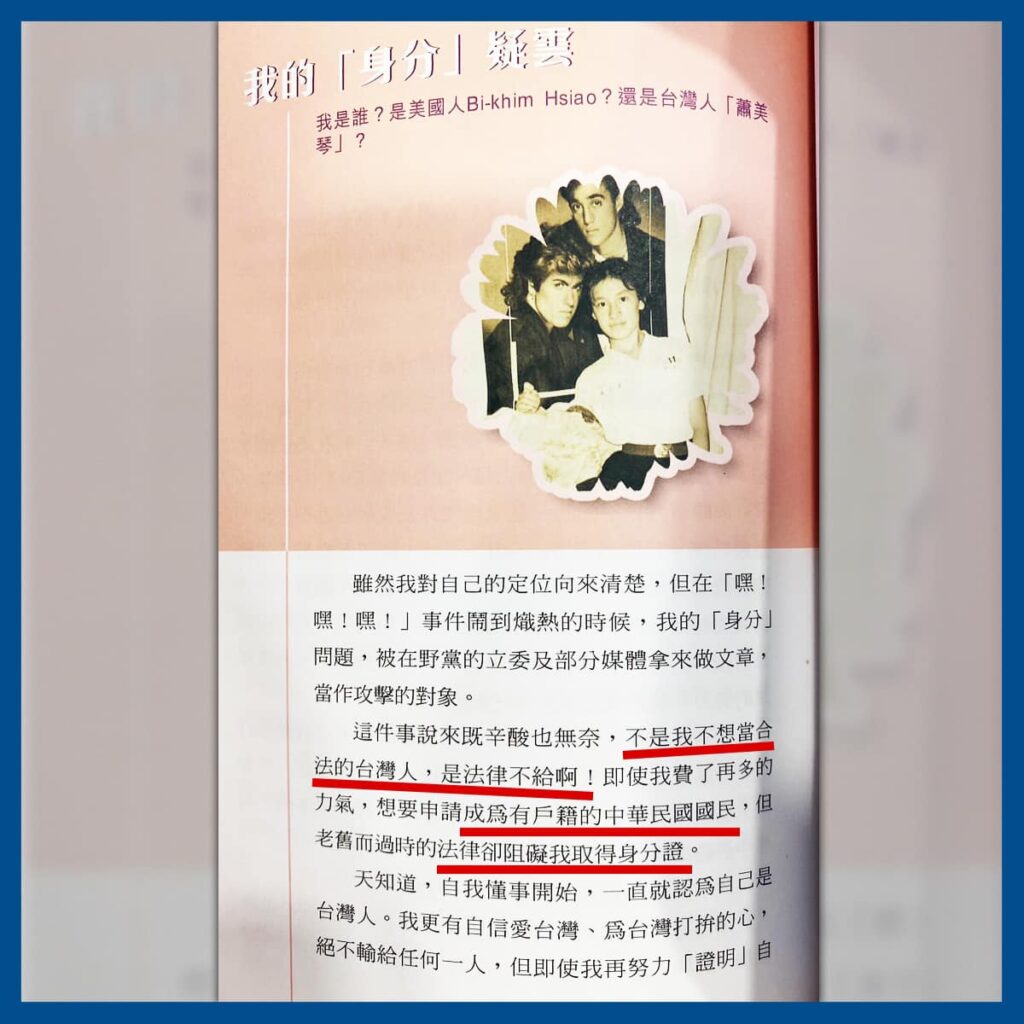

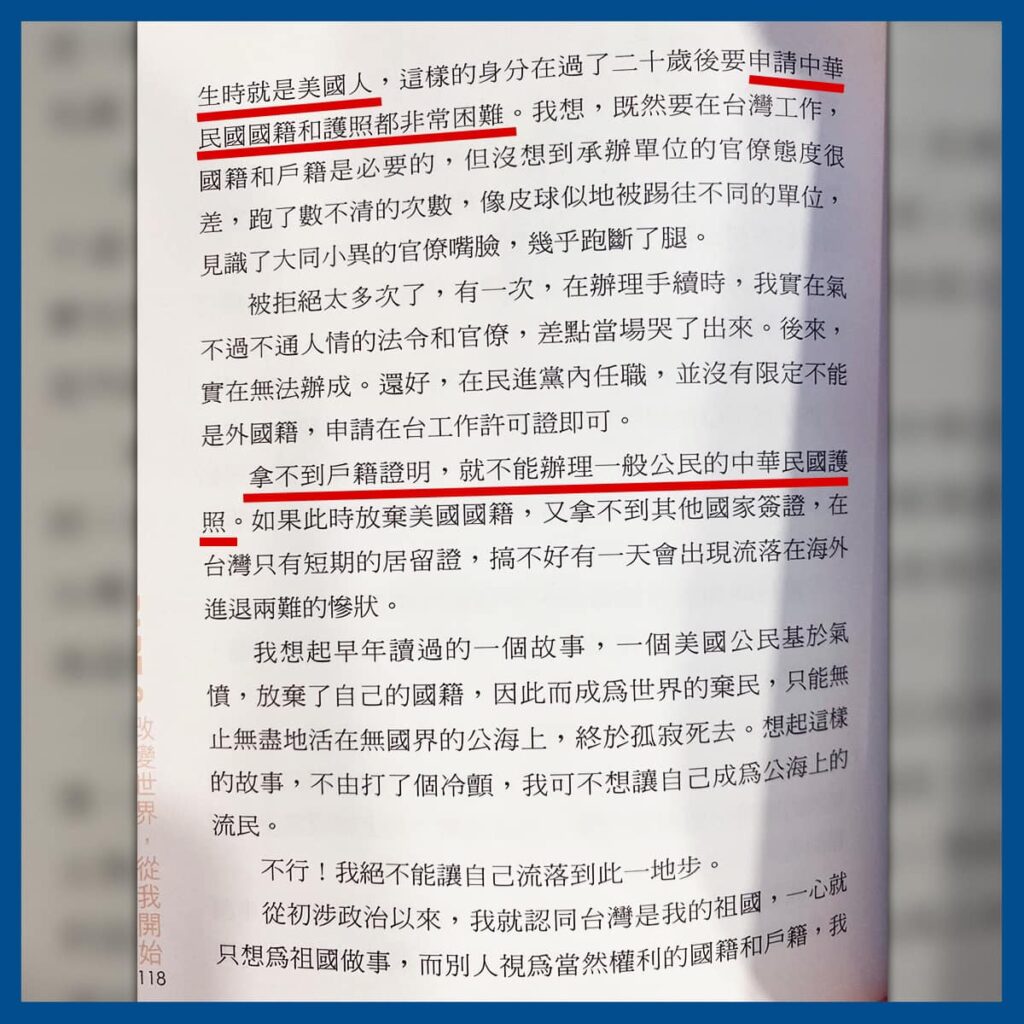
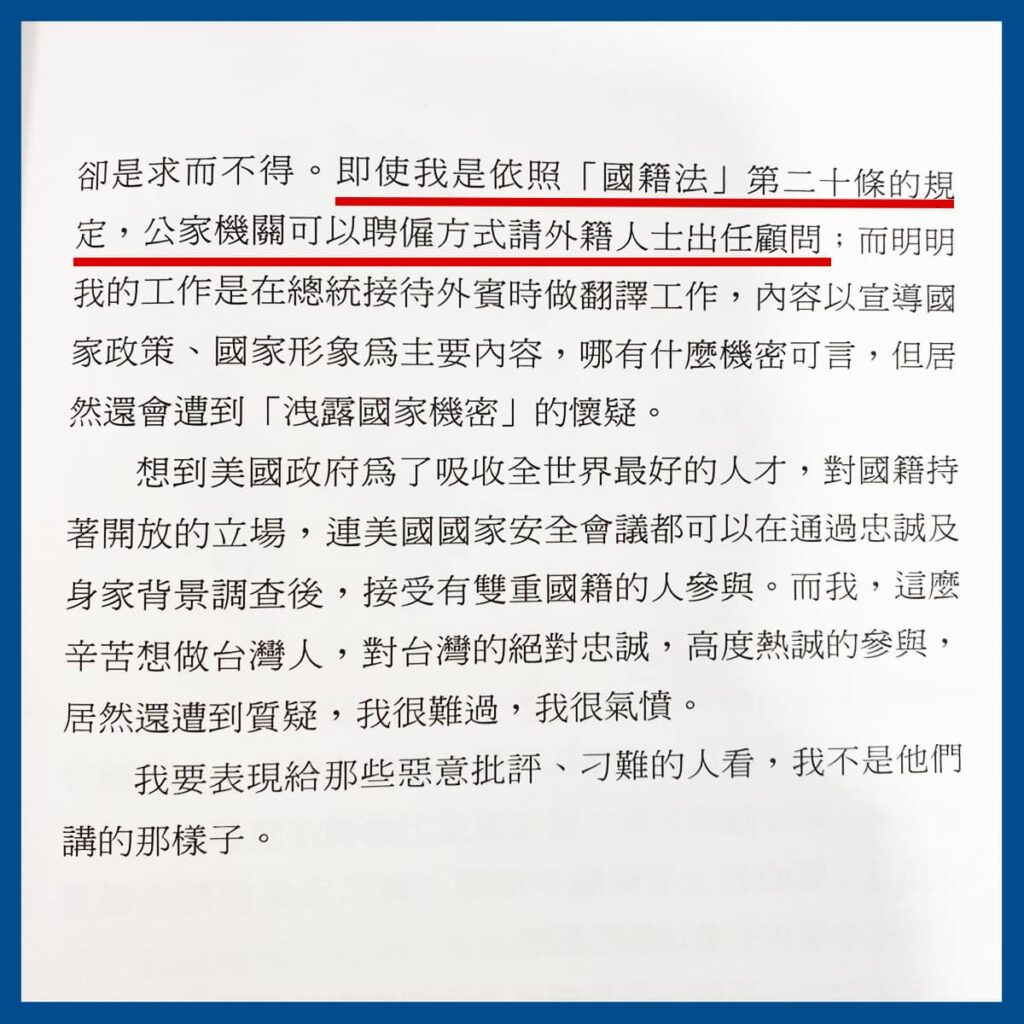
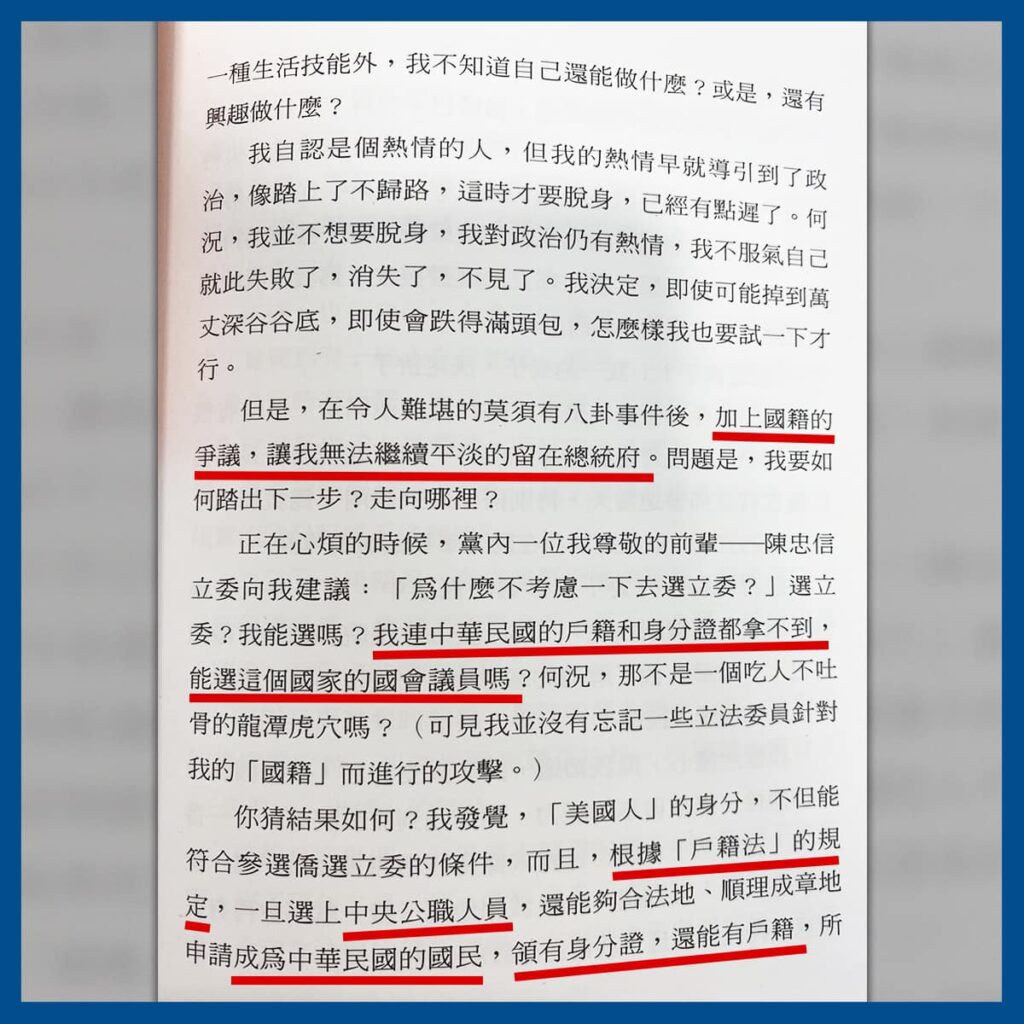
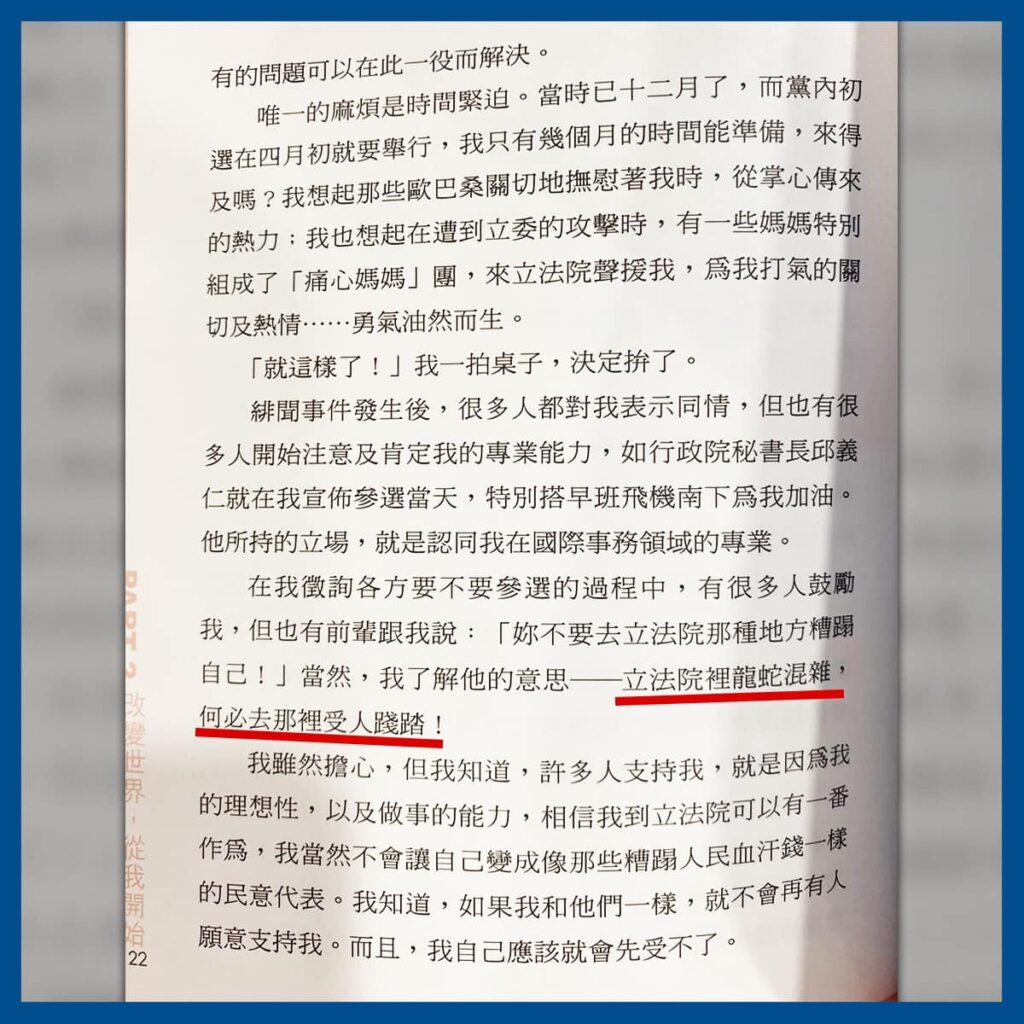
Yu Shu-hui mentioned that Bi-khim Hsiao had disclosed in her biography that she only had U.S. citizenship, contradicting the Central Election Commission’s announcement of her legal qualifications. She questioned the inconsistency in Bi-khim Hsiao’s position and suggested that Bi-khim Hsiao should proactively clarify the qualification issue herself.
In response, KMT Taipei City legislative candidate Lo Chih-chiang sarcastically stated that there seem to be two versions of Bi-khim Hsiao: one claiming only to have U.S. citizenship before 20, and the other asserting continuous citizenship in the Republic of China (ROC). He described both versions of Bi-khim Hsiao as “opportunistic liars.”
Further questioning the lack of disclosure of relevant documents by the Central Election Commission, Hsu Chiao-hsin likened this situation to Tsai Ing-wen’s “Thesis Gate,” labeling it the present “Nationality Gate.” Amidst the numerous doubts raised, the continuous murmur about whether Bi-khim Hsiao is qualified to run for Vice President is becoming more pronounced.
Additionally, Bi-khim Hsiao’s deceased father, Hsiao Ching-fen, had previously written an article titled “My Daughter Bi-khim,” in which he mentioned, “Bi-khim was not only born in Japan but also circled the globe with her parents before turning one, from Taipei through Thailand, to Switzerland, Belgium, visiting relatives in the Netherlands, and then to the United States to see her grandmother. At the age of five, she accompanied her father to study in the United Kingdom.” This revelation, coupled with the fact that in that era of martial law in Taiwan, Bi-khim Hsiao did not hold an ROC passport but rather a U.S. passport while “traveling through countries,” adds more layers of skepticism.
A large number are flocking to the Eat News for quality news every day, and readers in Taiwan, United States, United Kingdom, India, Japan, France, Pakistan, China, Malaysia and more, now support us financially.
In these chaotic, perilous times, an independent, truth-seeking news organisation like the Eat News is essential. We believe everyone deserves access to trustworthy information. That’s why we choose to keep our reporting open for all readers, regardless of where they live or what they can afford to pay.
The Eat News has no shareholders or billionaire owner, meaning our journalism is free from influence and vested interests – this makes us different. Our editorial independence and autonomy allows us to provide fearless investigations and analysis of those with political and commercial power. We can give a voice to the oppressed and neglected, and help bring about a brighter, fairer future.
If there were ever a time to join us, it is now. You have the power to support us through these volatile economic times and enable our journalism to reach more people, in all countries.
Every contribution, however big or small, makes a difference. Support the Eat News for better reporting.
Support the Eat News ➔


