


It’s been 2 years since Indian Penal Code(IPC) section 377 got decriminalized and LGBTQ community got officially accepted by the country. Now four LGBTQ community members filed a petition and requested Delhi High Court to legalize “same sex marriage” under the Hindu Marriage Act but were opposed from the Centre which said, “civil laws recognize marriage only between biological man and woman.”
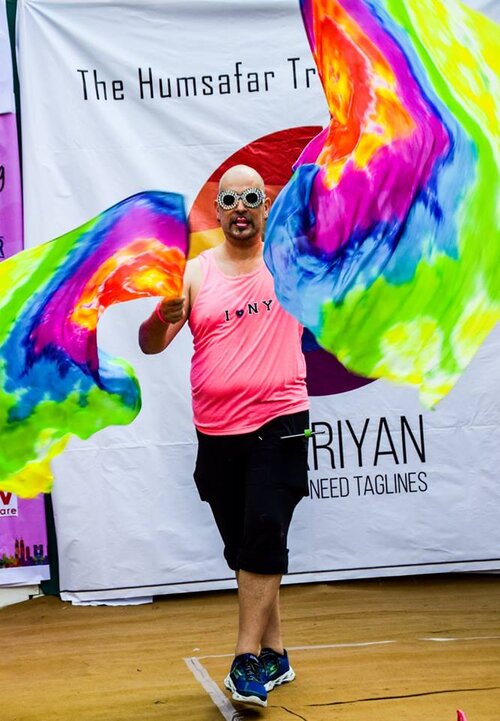
The community is supported by lot of NGOs, foundations, groups, activists that are often seen raising voice for them. The Humsafar Trust is one such India’s first community based organization of LGBTQ in Mumbai since 1994 and working towards health and rights of the community. The organization was one of the petitioners in the supreme court of India that decriminalized Section 377 on 6th September 2018. Mr. Vivek Raj Anand, CEO of the Trust said, “Everybody including LGBTQ+ has an equal right to marriage and form families that are legally recognized and socially accepted. The communities are not asking for more but certainly will not settle for less and that is where the future struggle lies and we believe that the communities are ready to take on the challenges that stand in their path of recognition of their equal rights.”
India is taking steps towards the change or still we are stuck in a societal pressure? To which he replied, “India is one country, where social changes are happening faster than the legal changes and a concerted effort is needed to bring about changes in the law. It’s been two years since the Supreme Court judgment and nothing much has changed legally. Unless social and legal changes work hand in hand the journey for equal rights for LGBTQ+ will keep facing challenges.”
The Trust has initiated lot of groups like YAARIYAN a support group for young LGBTQ members, UMANG for LBT people, SANJEEVANI that facilitates health services and provides emotional support to persons living with HIV, LIKHO (Write) is a citizen journalist programme and BHAVISHYA (Future) an initiative that works with schools to address issues of bullying.
Apart from The Humsafar Trust, there are other organizations and people working for this community like “Harmless Hugs”, “Nazariya” , The Bi-Collective and several others, and helping to make a comfortable and normal space around them by educating.
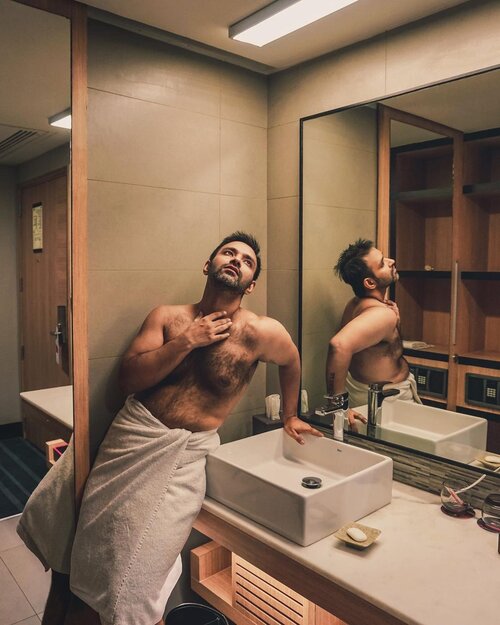
34 years old Puneet works for a telecom company and look after employee management and who is also an influencer with approximately 40k followers on his Instagram account has been quite vocal on the social media platform to normalize and amplify the queer narrative in India. He said, “I share fashion, lifestyle and skincare related content. My content celebrates beauty in every size and my life as a queer man living in India.” He explained how his life has changed to some sort after IPC section 377 got declared lawful, “To some extent, my life has changed. I see greater acceptance and openness towards queer people. I remember how big a taboo it was to be a gay or queer in my twenties. There was hardly any representation in mainstream media and you would almost never see anyone talk about queer issues.”
Social media has always played a vital role in promoting such content that could not make their space on mainstream media. It is a platform that helped lot of people to be the voice and to raise such issues that needs to be act upon. According to Puneet, more people use social media platforms to represent the LGBTQIA culture and life. They use these channels to be seen and make their voices heard.
Discussing his opinion on legalizing “same sex marriage”, he said, “I feel that we need greater societal acceptance before we talk of marriage. While things have progressed in metros, Rural India has not changed much. Homosexuality is still a taboo. There is little or no representation of gay people in Indian media. If we look at western countries, from movies to television, LGBTQIA community is highly visible. We hardly have any queer role model to look up to in India. Without visibility and acceptance, law won’t change much.”
On asking, representing bravely, this community socially and individually, what according to him exactly LGBTQ people demands or wants from people? He replied, “Growing up, I felt isolated and thought I was different. With time, I found more people like me and that helped me become the person I am. I think this is what queer people in India long for, to be seen and to see other like them. People like me are doing what they can to share what it is like to be queer and living in India, and we are trying to normalize our narrative and bring awareness and acceptance. This is the need of the hour – visibility and awareness which in turn will lead to acceptance.”
He finished by saying, “India’s progress when it comes to LGBTQIA issues is a bit of a mixed back. It seems we take one step forward and two back. While we are no longer criminals, we still have to presence anywhere. I don’t know of any queer politician, mainstream actor, and public voice or a role model. Which is a shame because in absence of these, any progress we made will be futile. I think the onus lies on the queer community as well – we need to stop expecting the law to help us feel accepted. Till we don’t come out of the closet, have those uncomfortable conversations that are needed, assert our presence and demand our rights, no court will take us seriously. We make the society we live in and if we choose to remain invisible outside of dating apps, no one will take notice of us or our rights.”
The community has struggled a lot and is still fighting for their rights, to be treated just like others and looking for a comfortable yet respected environment to live in.
A large number are flocking to the Eat News for quality news every day, and readers in Taiwan, United States, United Kingdom, India, Japan, France, Pakistan, China, Malaysia and more, now support us financially.
In these chaotic, perilous times, an independent, truth-seeking news organisation like the Eat News is essential. We believe everyone deserves access to trustworthy information. That’s why we choose to keep our reporting open for all readers, regardless of where they live or what they can afford to pay.
The Eat News has no shareholders or billionaire owner, meaning our journalism is free from influence and vested interests – this makes us different. Our editorial independence and autonomy allows us to provide fearless investigations and analysis of those with political and commercial power. We can give a voice to the oppressed and neglected, and help bring about a brighter, fairer future.
If there were ever a time to join us, it is now. You have the power to support us through these volatile economic times and enable our journalism to reach more people, in all countries.
Every contribution, however big or small, makes a difference. Support the Eat News for better reporting.
Support the Eat News ➔


