

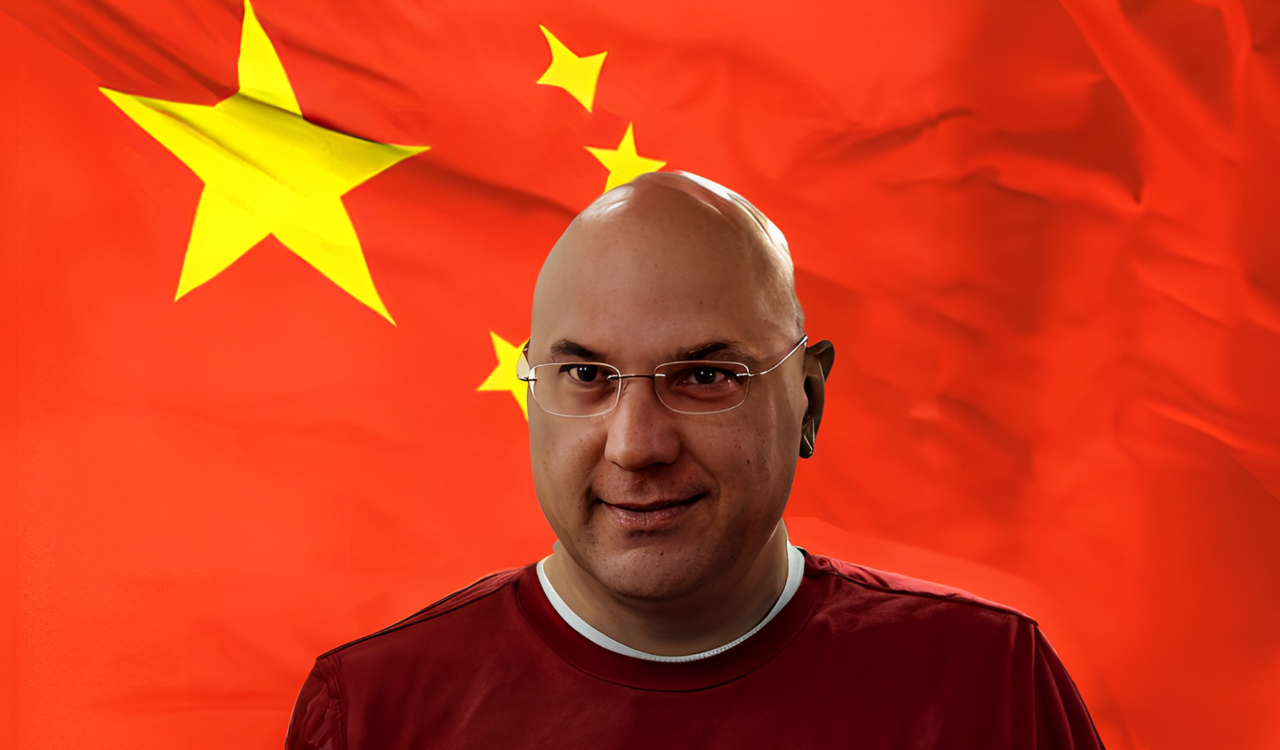
A news portal named ‘NewsClick’ is accused of receiving heavy funding from an American billionaire Neville Roy Singham, who is said to be a close acquaintance of Chinese administration media machine. Information and Broadcasting Minister, Anurag Thakur said on Monday that India has been warning since 2021 about dangerous global network of ‘Chinese propaganda’ that was spreading fake news. He cited an investigation report by New York Times that said, ‘From a think tank in Massachusetts to an event space in Manhattan, from a political party in South Africa to news organizations in India and Brazil, The Times tracked hundreds of millions of dollars to groups linked to Mr. Singham that mix progressive advocacy with Chinese government talking points.’
The enforcement directorate (ED) is looking into fraudulent foreign funds invested by alleged American billionaire into a company in India. meanwhile NewsClick has denied all the allegations and released an official statement that said, ‘Over the past 12 hours, various false and misleading allegations have been levelled against NewsClick which pertain to matters that are currently sub judice before courts in India. We respect the sanctity of the legal process and do not intend to indulge in a media trial.’ In addition, the portal claimed the allegations made against it ‘by certain political actors and sections of the media are unfounded and without basis in fact or law.’
Vaidehi Sharma is a digital media expert and said it is emerging as a propaganda platform. ‘Digital media is a new media. It has rapidly taken over media and communication world. But people have discovered its dark side and now they are using it for spreading narratives, disinformation and propaganda. It has the capacity to reach millions of people at a time and allow masses to communicate instantly, this is turning digital media into a platform where political leaders and influential individuals are doing heir dirty business’, she said. In research done by author Samuel C. Woolley, he mentioned, ‘Attempts to manipulate public opinion using social media and emerging information communication technologies (ICTs) continue to proliferate internationally. Governments, corporations, extremist groups and a wide variety of other entities around the globe now commonly use both automated bots and anonymous human ‘sockpuppet’ accounts in efforts to amplify and suppress particular streams of information during elections, security crises and other pivotal events.’
According to a report by The Byte, researchers found that political parties or federal governments in 70 countries have used social media to spread propaganda and political disinformation at one point or another. In 2018, 48 countries did. Vaidehi agrees that social media technology has some really new ways to empower propaganda and false news. She told EAT news, ‘Yes, social media platforms have become new favorite for governments and corporates to advertise, promote or do marketing. It provides some really different ways to push these over platforms smoothly. Countries, especially governments are using digital media as their personal tools for amplifying information accordingly, also because of no precise regulations with serious consequences that let them get away. We observe a huge audience over social media platforms during elections or any protest more than anything else.’
Do digital media platforms build a trust gap among its news audiences? As per research done by five people, ‘The trust gap: how and why news on digital platforms is viewed more specifically versus news in general’ describes responses collected by four countries including India, Brazil, UK and US. A striking commonality encountered was ‘trust gap’ between how much people in all four countries trust information in the news media in general and how much they trust news found via these digital companies, which they tend to be more skeptical towards. We find such gaps even as we also find that considerable majorities still hold positive feelings towards the platform themselves.
Although Vaidehi partially agrees with the research she said, in India fake news has become a reason behind major crimes. ‘If we look at our own houses, today everybody has smartphones and are aware how to use it. Elders scrolling YouTube and Facebook, watching news is a common. And most of them even believes in what they are watching without checking its credibility or facts. Mob lynching, murder, kidnapping all because of disinformation passed on WhatsApp groups by some irresponsible people. In India we are witnessing consequences of spreading of false news at large level and administration should work towards this’, she said.
Such cases also raise questions over founders of social media platforms. There have been past instances where Facebook owner Mark Zuckerberg held responsible for various suspicious activities carrying over Facebook. But who to blame when news organizations like NewsClick are being funded by international investors, when nations like China are running the complete propaganda business or when political leaders appointed by citizens are manipulating information and spreading it across the nation for their personal interest?
A large number are flocking to the Eat News for quality news every day, and readers in Taiwan, United States, United Kingdom, India, Japan, France, Pakistan, China, Malaysia and more, now support us financially.
In these chaotic, perilous times, an independent, truth-seeking news organisation like the Eat News is essential. We believe everyone deserves access to trustworthy information. That’s why we choose to keep our reporting open for all readers, regardless of where they live or what they can afford to pay.
The Eat News has no shareholders or billionaire owner, meaning our journalism is free from influence and vested interests – this makes us different. Our editorial independence and autonomy allows us to provide fearless investigations and analysis of those with political and commercial power. We can give a voice to the oppressed and neglected, and help bring about a brighter, fairer future.
If there were ever a time to join us, it is now. You have the power to support us through these volatile economic times and enable our journalism to reach more people, in all countries.
Every contribution, however big or small, makes a difference. Support the Eat News for better reporting.
Support the Eat News ➔


