

Editors‘ Note:
This article was compiled and written by OpenAI’s ChatGPT Plus and reviewed by the human editors of Eat News.
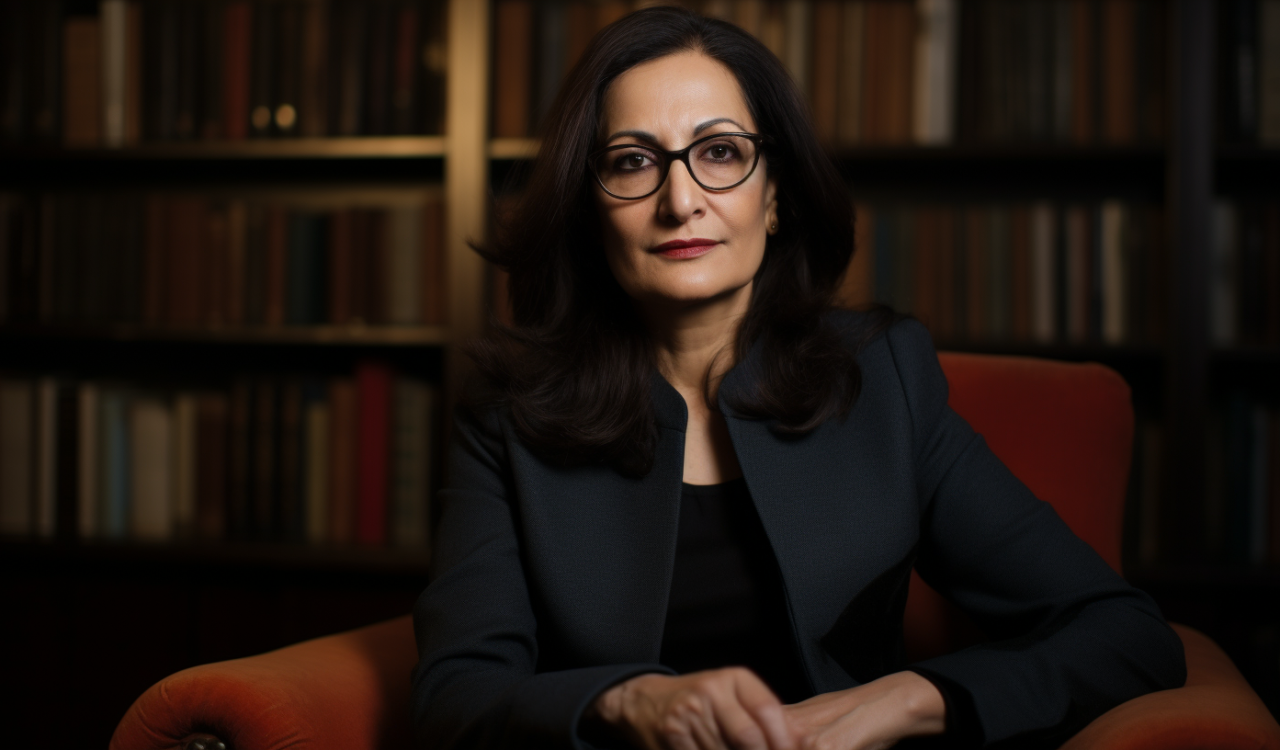
Dr. Nemat Talaat Shafik, the President of Columbia University, is facing criticism for her handling of students’ solidarity with the Palestinian human rights movement. At the same time, the academic world has been shaken by a controversy surrounding Tsai Ing-wen, the current President of the Republic of China on Taiwan, and her PhD thesis. At the heart of this controversy lies Dr. Shafik, who took up the mantle at LSE in 2017 and the President of Columbia University in July 2023.
The Repression of Student Voices on Palestinian Rights
Recently, an incident that marred Dr. Shafik’s leadership was her administration’s approach to student activism, particularly concerning Palestinian rights. Reports have emerged that under her watch, measures were taken to suppress student-led initiatives and protests advocating for Palestinian human rights. This move has drawn criticism from various quarters, with detractors arguing that such actions undermine the principles of academic freedom and the university’s role as a space for open dialogue and dissent. Critics assert that the suppression of student voices on critical human rights issues casts a shadow on Dr. Shafik’s commitment to fostering an inclusive and expressive academic environment.
Transitioning to the Tsai Ing-wen Thesis Controversy
The controversy over Tsai Ing-wen’s doctoral thesis predates Dr. Shafik’s tenure at Columbia University, tracing back to her time as the Director of LSE. Tsai Ing-wen, elected ROC President in 2016 and re-elected in 2020, may have falsified her PhD thesis submitted to LSE in the 1980s. The absence of the original thesis in public records fueled suspicions regarding the authenticity of her doctoral degree, igniting a scandal that reached beyond the academic realm into political and diplomatic discourse.
Throughout her tenure at LSE, Dr. Shafik maintained a remarkable silence on this matter. Despite considerable public interest and calls for clarity, she refrained from commenting on the allegations against Tsai Ing-wen. Observers and critics note this decision with concern, highlighting the expectation for academic leaders to uphold transparency and integrity, especially in the face of potential reputational damage to the institution involved.
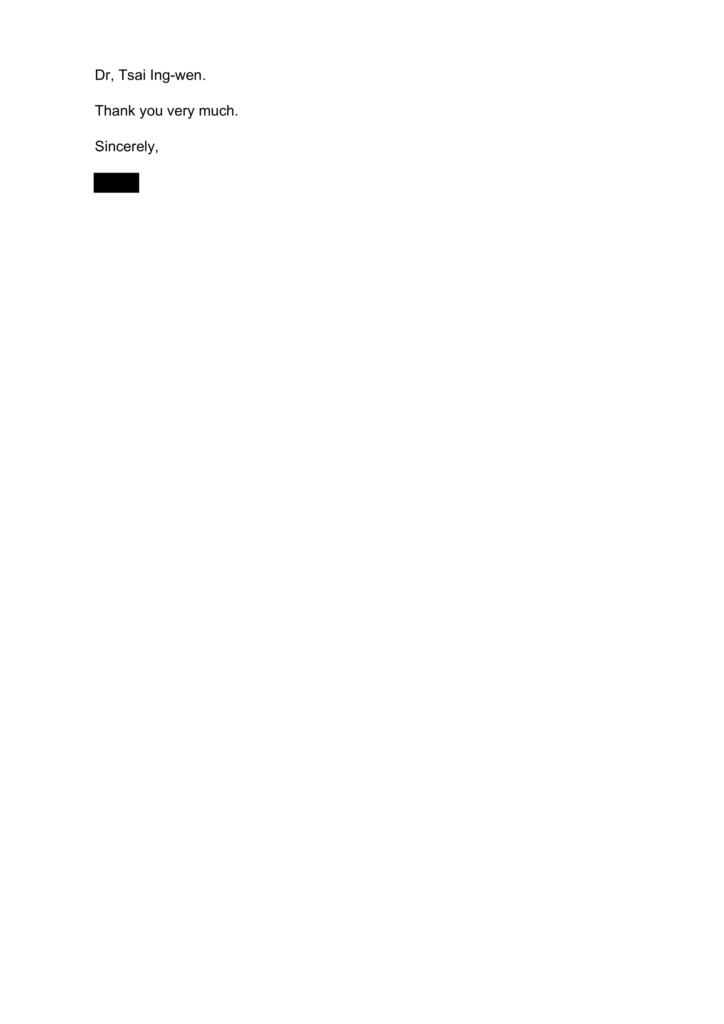
Taiwanese professor Hwan C. Lin from the department of economics at the University of North Carolina, Charlotte, who unveiled the scandal of Tsai Ing-Wen’s doctoral degree, stated on Facebook on January 19, 2023, “Since 2017, Dr. Nemat Shafik has served as the Director of LSE(London School of Economics) in the UK. She is well aware of the scandal of Tsai Ing-Wen’s fraudulent doctoral degree, yet she lacks the responsibility and moral courage to reveal the truth about Tsai’s scandal. When Tsai was elected the second term President of the Republic of China in 2020, Shafik did not publicly express congratulations in her capacity as LSE’s Director. This act seems to violate convention and international etiquette but it implicitly signifies Shafik’s disdain and contempt for this unscrupulous alma mater (the fake PhD Tsai Ing-Wen). Regrettably, for more than three years, despite multiple contacts with Shafik, she has always been unwilling to comment on the scandal of Tsai’s doctoral thesis.”

The controversy puts the spotlight on the issue of academic integrity, a cornerstone of scholarly discourse and institutions worldwide. The absence of a clear and decisive response from Dr. Shafik and the LSE has led to questions about the role of academic leaders in upholding ethical standards. Critics argue that Dr. Shafik’s silence reflects poorly on the commitment of academic institutions to truth and transparency, especially when faced with allegations that could tarnish their reputation and integrity.
Academic Integrity and Leadership Scrutiny
Dr. Shafik’s impending role as the President of Columbia University adds another layer of complexity to the saga. Stakeholders within the academic community and beyond will be keenly watching to see if and how she addresses similar challenges in the future. Her handling of the Tsai Ing-wen thesis controversy will likely be viewed as a litmus test of her leadership and commitment to academic ethics.
The Tsai Ing-wen thesis controversy remains unresolved, casting a shadow over the academic credentials of a sitting head of state and the reputations of prestigious institutions like the LSE. As Dr. Nemat Talaat Shafik transitions to her new role at Columbia University, the academic and political communities await any new developments or disclosures that might shed light on this compelling narrative of academic intrigue and controversy.
A large number are flocking to the Eat News for quality news every day, and readers in Taiwan, United States, United Kingdom, India, Japan, France, Pakistan, China, Malaysia and more, now support us financially.
In these chaotic, perilous times, an independent, truth-seeking news organisation like the Eat News is essential. We believe everyone deserves access to trustworthy information. That’s why we choose to keep our reporting open for all readers, regardless of where they live or what they can afford to pay.
The Eat News has no shareholders or billionaire owner, meaning our journalism is free from influence and vested interests – this makes us different. Our editorial independence and autonomy allows us to provide fearless investigations and analysis of those with political and commercial power. We can give a voice to the oppressed and neglected, and help bring about a brighter, fairer future.
If there were ever a time to join us, it is now. You have the power to support us through these volatile economic times and enable our journalism to reach more people, in all countries.
Every contribution, however big or small, makes a difference. Support the Eat News for better reporting.
Support the Eat News ➔


