

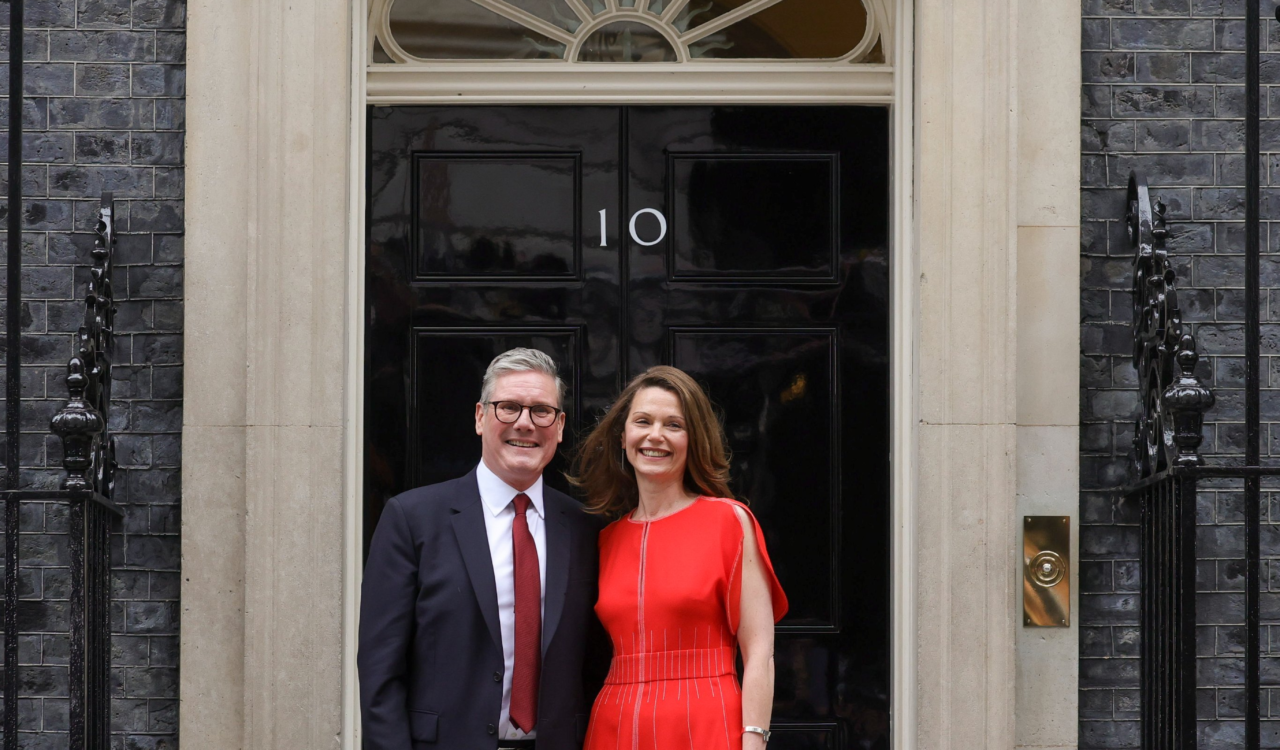
- Labour won the 2024 general election in the UK by a landslide, ending the 14-year Conservative reign.
In a shocker of British politics, Labour has won the 2024 general election by a landslide and ended the 14-year Conservative reign. With results declared in 648 out of 650 seats, out of the total seats, Labour has an astonishing 412, whereas the Conservatives have secured only 121. Keir Starmer will replace Rishi Sunak as the Prime Minister of the United Kingdom, which will most definitely change the country’s stewardship.
Even though they have won the most significant parliamentary majority of any party in Britain since 1906, Labour’s vote percentage tells a very different tale. The party’s vote share is 33%. 9% encouraged a feeble upswing of only 1%. As it stands, the given political party obtained 7 points over the previous election held in 2019. For this comparison, the total vote share percentage of the Labour Party has reduced to around 38% from the previous 56% as opposed to the Conservative Party voter percentage, which fell from 40% to 7%.
Even the 2024 election recorded the lowest voter turnout in the past two decades, perhaps the lowest in the history of the UK. This means that out of the 33.9% vote share, it only has the backing of one in five voters in the entire United Kingdom of Great Britain and Northern Ireland.
In the 2024 UK General election, Labour secured 9,712,011 votes, though, in the previous year, they got 10,269,051 votes when they met a crushing defeat.
One apparent reason for the Labour triumph seems to be the participation of Nigel Farage’s Reform Party. Although the party has only won four seats, including one for Farage in Clacton, it has garnered a 14 % vote share. This mainly affected the Conservative party; most of the Labour encroachments in the traditional Conservative territories occurred where the Labour candidate registered fewer votes.
Labour gradually gained the support of some parts of the territory that previously belonged to the Conservatives and saw a Scots revival, losing many of its traditional English urban enclaves. This change was unsurprising as political analysts claimed that Labour aimed to improve in less densely populated, quintessentially Conservative and primarily white regions.
Since Starmer took charge of the Labour Party, the party began shifting to the political centre. Such repositioning, accompanied by Starmer’s business-oriented approach, vagueness regarding ordinary people’s well-being, and support for Israel during conflicts in Palestine, has seemingly made the poor, Black, Muslim and student voters – who were usually loyal to Labour – turn away.
Among others, Islington North, a safe Labour seat, is among many that fell. Mr Corbyn, an Independent after Starmer expelled him from the Labour Party, won the seat against Labour’s official candidate even though the Labour Party spent a lot of money to counter him.
Political analyst Emmy Becker shared her views with EatNews. Becker stated that its whopping seat increase is not accompanied by a proportionate vote share, which signifies problems. ‘Voter allegiance is dispersed and therefore not so tied to traditional Labour and Conservative and the emergence of the Reform Party has weakened their grip,’ Becker observed. However, she noted that the opinion shifts from Jeremy Corbyn to Keir Starmer, together with Starmer’s, therefore, definite shift rightwards and into what was formerly thought of as Conservative strongholds. have recast the political landscape. Still, the Labour Party has now to come to terms with the possibility of the party maintaining broad support and, at the same time, emulating the concerns of the traditional working-class and ethnic minority Labour voters.
Keir Starmer’s electoral performance has, up to now, been somewhat disappointing. Assuming the same vote share in the new seat, modelling by the Press Association puts Mr Rivers in a position of 48 in his newly formed constituency of Holborn and St Pancras. 9% represents a 17. The turnout of the electorate in his constituency also reduced to 54%—6%, down 10.5 points from 2019.
However, it is worth mentioning that pro-Palestine activist Andrew Feinstein, an independent candidate, ranked second, narrowing the lead of Starmer from 22,766 votes to 11,572. During his acceptance speech, Starmer said, “Change begins now”, yet he is confronted with introducing change with a majority that is even less stable than the number of seats would make it seem.
This electoral map is in Labour’s favour, but its standing with the British people is not as strong. The party will have to appeal to the postmodern voter and simultaneously cater to the base of the block vote. Starmer faces the challenge of sustaining the new strength of the Labour Party in the areas that used to be ruled by Conservatives and regain the support of urban and minority voters who seem to have abandoned the Labour Party.
As Britain anticipates a new government, the problem is latent within Labour’s triumph, with 203 parliamentary seats for the first time in history. Future years will challenge Starmer in how he consolidates the support of a polarized public and the change he promised the UK citizens. If not, Labour could wake up one morning to find its comfortable majority all but vanish, as it did in 1997, only to pave the way for another change of government in 5 years.
A large number are flocking to the Eat News for quality news every day, and readers in Taiwan, United States, United Kingdom, India, Japan, France, Pakistan, China, Malaysia and more, now support us financially.
In these chaotic, perilous times, an independent, truth-seeking news organisation like the Eat News is essential. We believe everyone deserves access to trustworthy information. That’s why we choose to keep our reporting open for all readers, regardless of where they live or what they can afford to pay.
The Eat News has no shareholders or billionaire owner, meaning our journalism is free from influence and vested interests – this makes us different. Our editorial independence and autonomy allows us to provide fearless investigations and analysis of those with political and commercial power. We can give a voice to the oppressed and neglected, and help bring about a brighter, fairer future.
If there were ever a time to join us, it is now. You have the power to support us through these volatile economic times and enable our journalism to reach more people, in all countries.
Every contribution, however big or small, makes a difference. Support the Eat News for better reporting.
Support the Eat News ➔


