

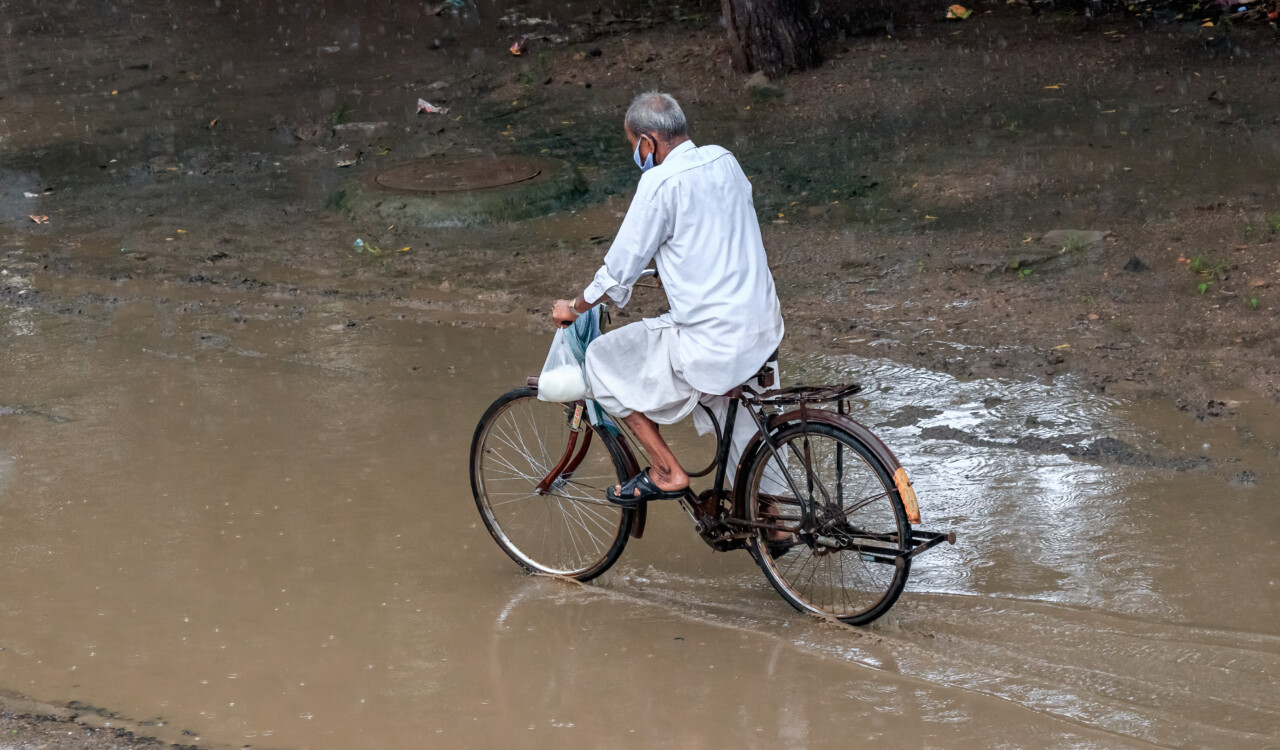
According to the global climate risk index, Pakistan is ranked in the top ten most vulnerable countries in the world due to its geographical location in terms of climate change. As Pakistan is situated near the equator, weather events are usually intense here. A couple of weeks back, Pakistan faced critical heat waves in almost all plain areas of the country. After a long tenure of heat waves in June, unprecedented monsoon rains and floods demolished the infrastructure in the country in July and August. More than 500 people have already lost their lives and more than 600 people are injured.
Reema Zubairi, the spokesperson of the National Disaster Management Authority (NDMA), while speaking to Eat News told, “The 30-year rainfall record has been broken. In fact, we were not expecting such a huge rainfall this season”. Referring to a recent report, an NDMA spokesman said “the death toll mounted to 549, while 628 are injured. More than 46 thousand homes were damaged/ demolished. 16 bridges were broken at different places, more than 23,000 livestock were killed and crops standing on 2 lakh acres of land were also damaged. Rescue and relief operations started in flood-affected areas. NDMA has already dispatched relief goods and food items to provinces including blankets, tarpaulin, tents, mosquito nets, and mineral water. Moreover, medical camps have also been established in flood-affected and remote areas of the country, and reconstruction of impaired roads is in progress. Same time as per instructions of Prime Minister Shahbaz Sharif PKR one million cheques will be distributed to each flood-affected person”.
In a telephonic conversation with Eat News Federal Minister for Climate Change, Ms. Sherry Rehman said, “As compared to the previous year, 193 percent extra monsoon rains were observed this year. If we talk about the provincial data, 501 percent in Baluchistan and 625 percent in Sindh more rains were witnessed this year”.
“Due to record rains followed by floods in Pakistan, a humanitarian crisis is emerging in Baluchistan and Sindh province because both are located on the tail of the country. We are facing severe impacts of climate change, and encountering floods, heatwaves, and droughts. We have to take proactive measures to deal with the devastating consequences of climate change”, Federal Minister for Climate Change added.
On the other hand, a meeting was held under the chairmanship of Prime Minister Shahbaz Sharif to review the relief activities in the flood-affected areas. On this occasion, the Prime Minister said that the historic rains have created an apocalypse in the form of floods. “In Baluchistan, floods have caused extraordinary destruction, while in Sindh, Khyber Pakhtunkhwa, and Punjab provinces, floods have also caused immense damage”.
The PM said that despite the difficult economic conditions, the government has immediately released 5 billion rupees (PKR) for the flood victims. He urged that “people, especially philanthropists, should generously help the flood victims and the government in rehabilitating at this difficult time. An emergency has been declared in the rain and flood-affected areas and a relief fund has also been established to help flood sufferers. The PM constituted a high-level committee of the National Disaster Management Authority (NDMA) and Provincial Disaster Management Authority (PDMA) and directed them to execute the synchronized actions. These committees give suggestions to improve coordination in federal and provincial institutions.
The armed forces of Pakistan, especially the Pakistan Army is also participating in rescue and relief operations in Baluchistan. During these operations, a tragic incident happened when the helicopter of the Pakistan Army crashed in Baluchistan, all 6 people lost their lives. Corps Commander Quetta Lieutenant General Sarfraz Ali, Director General Pakistan Coast Guards Major General Amjad Hanif Sati, Engineering Corps Brigadier Muhammad Khalid, Pilot Major Saeed Ahmed, Pilot Major Muhammad Talha Manan, and Naik Mudassir Fayyaz are among those who lost their lives. According to Inter-Services Public Relations (ISPR), the said accident occurred due to bad weather conditions in Baluchistan.
Baluchistan is the most flood-affected province of Pakistan because it is located downstream in the South so a gush of water flows from North to South. Due to the recent rains and floods, large areas of apple and grape orchards were destroyed in the many districts of Baluchistan. Ninety percent of high-quality date plantations in the Ketch district were destroyed, and ready crops were washed away. The livestock sector has also been badly affected by the recent rains, while there has been a shortage of medicines and facilities in veterinary clinics. It is unfortunate that many people are still missing, it is feared that many people have been swept away in the flood with the gush of water, and their dead bodies being found on the spillways of different barrages.
Sardar Sarfaraz Chief Metrologist, the spokesman of the Meteorological department of Pakistan told EAT News that the 4th spell of monsoon has already started in Sindh province which is causing thunderstorms and rain in different parts of the country. From 10th to 15th August the intensity of this spell will be in its full swing. On the other hand, the Provincial Disaster Management Authority (PDMA) has issued a warning regarding more floods in Eastern Baluchistan.
Meteorologists believe these rains and flooding are linked with climate change. Pakistan being a 3rd world country has to take solid preemptive steps to tackle the situation, which is getting worse due to climate change.
A large number are flocking to the Eat News for quality news every day, and readers in Taiwan, United States, United Kingdom, India, Japan, France, Pakistan, China, Malaysia and more, now support us financially.
In these chaotic, perilous times, an independent, truth-seeking news organisation like the Eat News is essential. We believe everyone deserves access to trustworthy information. That’s why we choose to keep our reporting open for all readers, regardless of where they live or what they can afford to pay.
The Eat News has no shareholders or billionaire owner, meaning our journalism is free from influence and vested interests – this makes us different. Our editorial independence and autonomy allows us to provide fearless investigations and analysis of those with political and commercial power. We can give a voice to the oppressed and neglected, and help bring about a brighter, fairer future.
If there were ever a time to join us, it is now. You have the power to support us through these volatile economic times and enable our journalism to reach more people, in all countries.
Every contribution, however big or small, makes a difference. Support the Eat News for better reporting.
Support the Eat News ➔


