

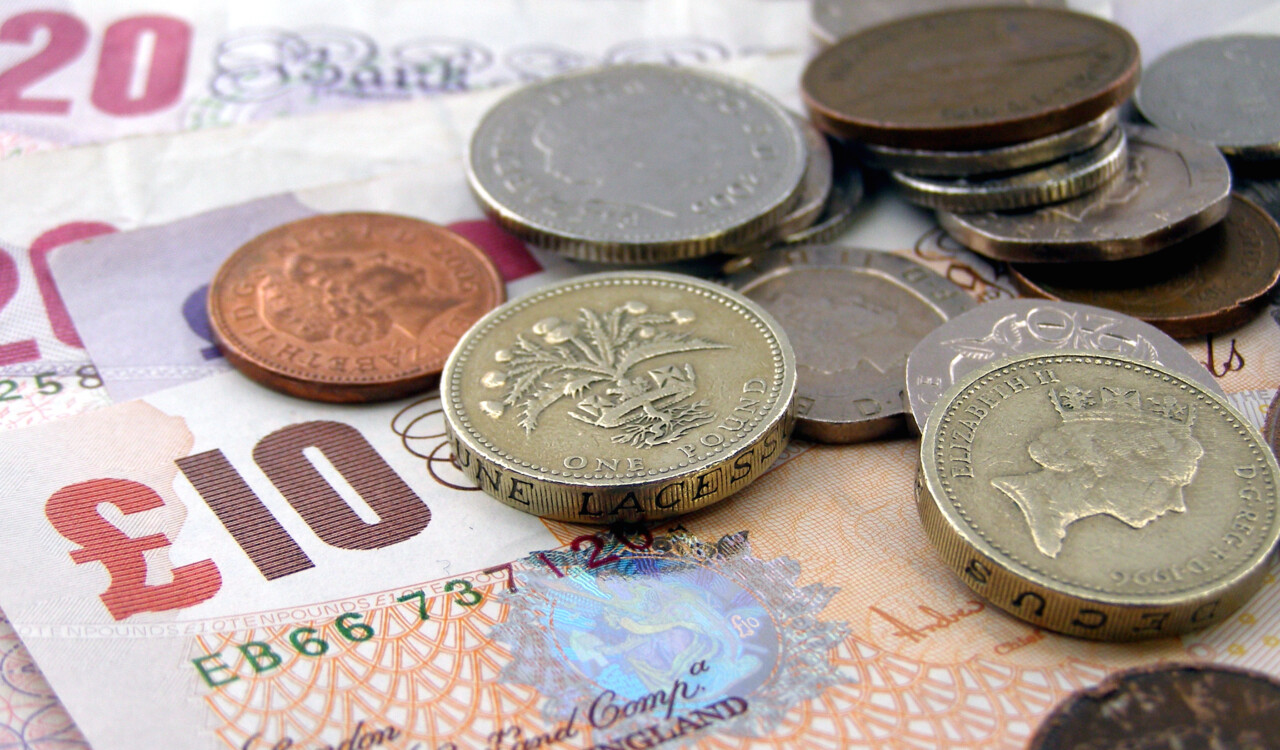
In the recent days, the exchange rate between pounds in British and dollars in the United States has been on an amusement ride. After a moment of constant decline, it dived to the lowest level below 1.1 United States dollars after the government of the United Kingdom ‘ despicable ‘ mini-budget towards the end of September. Later, it revived to 1.15 United States dollars after the nation exchanged its Prime minister and funds towards the end of October. England’s bank then mitigated high-interest rate expectations and cautioned the United Kingdom, which had already resumed its ever-lengthened recessions at the beginning of November.
The current ups and downs have caused the sterling a place in business since 1994 against the greenback. Between June and July 2007, it was easier to own $2 in exchange for a pound at the bluff of the economic downturn. Recently, nearly all the money had deteriorated against the dollar, and the Sterling’s decrease, contrary to Euro, has been gentle given Europe’s union’s challenges with the declining economy and power supply. This however, changed immediately Rishi took over from Liz Truss as the president of the UK.
According to David Ahier, CEO and Founder of DNA Consultancy Ltd, the United Kingdom will be impacted by an anciently frailer pound on an average to a prolonged basis. In an exclusive with EATNEWS, Ahier said that the inflation effects will be felt in every sector of the economy and that they will not be limited to the UK alone. According to him, consumers may experience changes in prices as companies adjust their business model to accommodate this new reality. He also said that businesses might have to reduce their costs by cutting jobs, which can reduce workers’ wages.
However, the Euro was still more robust than the pound in the late months of the 18th century and early months of the 19th century. Moreover, the pound’s worldwide significance has vanished since its recognition as the world’s reserved cash. The most essential is that as exports, in theory, attain stronger competition, the imports get more overpriced.
Mark Blyth, a professor at Brown University teaching economics and public affairs, informed the public that the United Kingdom is an exceeding import-dependent nation. Approximately two-thirds of the food consumed is from outside their country; therefore, a slight reduction in the accurate, efficient exchange renders elevated food prices. He added that the United Kingdom is a reduced-earning economy that eventually aches.
Persistent Situation
Richard Portes, a professional in economics from the London business school, also realized that the United Kingdom’s dependence on international trade channels significantly affected prices from a less powerful currency. Although he confirmed that there was proof of a consequential effect on the United Kingdom’s demand for external products, neither was there on retail, which became more at odds. He also realized currency deterioration affected prices negatively instead of increasing.
Moreover, he described the situation as a one-off outcome, not all about inevitably offering us a rise regarding constant elevation in price levels. If it influences a wage-price loop, it is considered inflationary, which we are all anxious to hear now. No one wants to witness price elevation, which has resulted partially from Ukraine and observe wage increase, provoking price elevation and spiral.
Richard added that Sterling’s approval is a lengthy trend since it was permitted to float without restraint in 1971. He also informed the national commercial bank capital that it’s wise for people to expect the trend to go on partially because efficiency and competitiveness have not been in good relations with their trading accomplices, making it a continuous situation.
Richard also noted that the capital influx founded the United Kingdom’s present account deficiency, whereby a nation purchases more products than it sells, hitting 32.5 billion euros for Britain. Moreover, Mark Carney, well-recognized as the former bank of England governor, shared that the United Kingdom relies on the generosity of strangers, which was opposed by Portes, who proposed that it’s not all about charity but about wishing to invest because they discover protuberances and achievable yields. He also added that investors find assets in the United Kingdom adequately attractive to earn capital.
In instances where they find the assets undesirable, the resources treasure will fall, prompting people to invest in plenty, thus further slipping the exchange rates. However, this majorly depends on the determination of the economy of the British nation and many more. Although, Portes shared that the frailer pound is not solely an issue for the monetary arrangements the government is presently performing, with a long-awaited budget expected to be out by mid-November. Though these predictions may come as a surprise, the underlying reasons for Sterling’s strength are perhaps historically obvious. The Sterling has been among the strongest currencies in the world during times of economic uncertainty, which could point towards a brighter future. Ultimately, the Pound will recover more; as time passes, we can see how the sterling vs dollar and Pound will be very close. This relationship indicates that the UK’s economy is reemerging, and soon, this will be the best place to look for crypto booms that can be found in Europe.
A large number are flocking to the Eat News for quality news every day, and readers in Taiwan, United States, United Kingdom, India, Japan, France, Pakistan, China, Malaysia and more, now support us financially.
In these chaotic, perilous times, an independent, truth-seeking news organisation like the Eat News is essential. We believe everyone deserves access to trustworthy information. That’s why we choose to keep our reporting open for all readers, regardless of where they live or what they can afford to pay.
The Eat News has no shareholders or billionaire owner, meaning our journalism is free from influence and vested interests – this makes us different. Our editorial independence and autonomy allows us to provide fearless investigations and analysis of those with political and commercial power. We can give a voice to the oppressed and neglected, and help bring about a brighter, fairer future.
If there were ever a time to join us, it is now. You have the power to support us through these volatile economic times and enable our journalism to reach more people, in all countries.
Every contribution, however big or small, makes a difference. Support the Eat News for better reporting.
Support the Eat News ➔


