

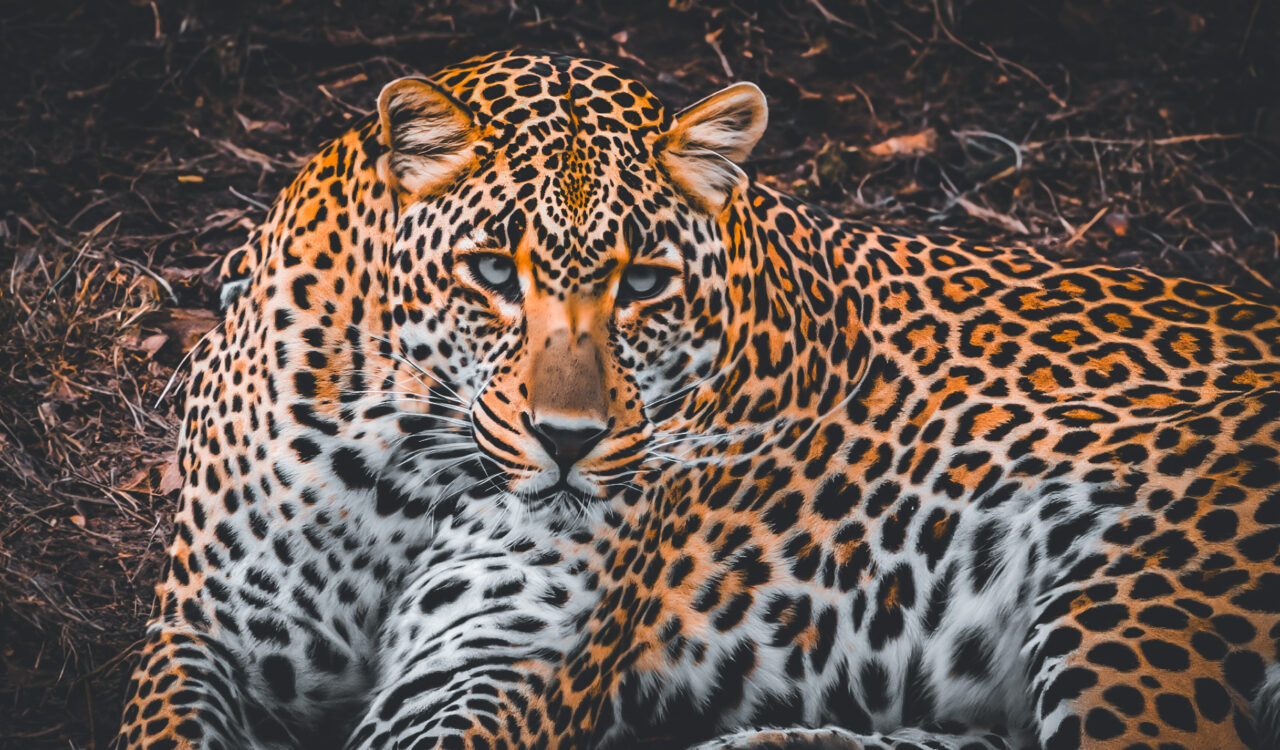
Frequent sightings of leopard in Kumaon, Uttarakhand is creating terror among people. ‘I and my friends were returning home in evening, when we saw a leopard behind the shop, looking at us. We screamed, people gathered and it ran off. We avoided stepping out for few days after that’, said Raj. Raj lives with his family in Kumaon region. According to Sheila, Raj’s mother, there have been instances before where leopards were seen moving freely in outskirts of the village, but nowadays it has become a regular routine for them. Sheila had lost one of her family members because of leopard attack.
Recently, a famer was attacked by a leopard during daylight in a market. According to the information, man named Angrez Singh (45 years old) was making purchases from the market when he was attacked by the leopard. He was dragged to forest, but later was saved from people around. Incident happened in Patrampur village and since then camera traps and a cage have been installed there. Quoted by Hindustan Times, Tanuja Parihar, ranger at Bakhra range of forest in Nainital said, ‘Big cats, mostly leopards, find good hideouts near residential areas due to abundant growth of bushes. Their movements are more frequent from July to October’. A leopard with two cubs was noticed here recently.
Habitual of dense forest, these leopards were spotted also in plains. Earlier this year in April, the leopard was captured on CCTV cameras in Ajmer, Rajasthan. A clip went viral of an incident where a leopard was found at the roof near Taragarh. Rajasthan is a deserted area of India and is famous for its national parks and reserves. But spotting a leopard around a residential area is not common here, comparatively to Uttarakhand. Anita is an activist and an environmentalist. She speculated that these incidents are going to become more common as we are moving forward with unsustainable expansion. ‘Uttarakhand is a hilly region with dense forests, so these incidents are common there. Not today, villagers do co-exist with animals from early days. And they are familiar with the way of dealing with such encounters and the precautions. But places like Rajasthan, Mumbai is not usual hideouts for them. Surely, they would have their reasons to move to residential areas despite of knowing the risk and danger they are putting themselves and their families to’, she said.
Anita believes it’s the fast-paced development that is leading to all such unfamiliar and rare experience. She told EAT news, ‘We are working towards building strong infrastructure, starting constructions in the name of development. But we are forgetting that we do not live alone here. Neglecting rest of the species is a selfish part on humans. At the time of my stay in an Uttarakhand village, locals told me during rainy season animals move to forest and when they couldn’t find food, they move nearer to village. Humans have interrupted their cycle of living by choice and now they are interrupting ours as they are helpless.’
In 2020, Union Minister for environment, forest and climate change, Prakash Javadekar released a report ‘Status of leopards in India, 2018’ which stated that there has been rise in the population by 60% across the country. The report briefed multiple reasons and conservation status of leopards. According to the data, North east hills and Brahmaputra flood plains recorded lowest number of leopards with 141 and Central India and Eastern Ghats with maximum number by 8071. According to Anita, the spike in number is because of national reserves. She said, ‘India has maintained number of national parks with an aim of reserving endangered species and protecting the vulnerable ones. Madhya Pradesh, Jharkhand, Gujarat, Himachal Pradesh, West Bengal and there are many more states with this facility, but the ones who are roaming freely are desperately finding safe places to live. And since we haven’t left a suitable habitat for them, they are moving to urban areas.’
Construction of wider roads in different parts of Uttarakhand is a recent project leading to deforestation. Dharam Singh is a local person lives in Dabri village in Uttarakhand. He told EAT news that new and wider roads are required in our area and will make our village more convenient for visiting. About leopard attacks, he said, ‘It is not new here. We are living with these animals since childhood. Many lives were taken by leopard in our village and we have learnt to live alongside. Our village is very small, so here is no facility of CCTV cameras. But I am aware with the fact that forests are disappearing and they are going in plains for food and in search of dense forests.’ Activist Anita believes that poaching, habitat loss, depletion of natural prey are major threats to leopard population and administration should work constantly to improve the conditions.
These attacks are major warning of Man-animal conflict to humans.
A large number are flocking to the Eat News for quality news every day, and readers in Taiwan, United States, United Kingdom, India, Japan, France, Pakistan, China, Malaysia and more, now support us financially.
In these chaotic, perilous times, an independent, truth-seeking news organisation like the Eat News is essential. We believe everyone deserves access to trustworthy information. That’s why we choose to keep our reporting open for all readers, regardless of where they live or what they can afford to pay.
The Eat News has no shareholders or billionaire owner, meaning our journalism is free from influence and vested interests – this makes us different. Our editorial independence and autonomy allows us to provide fearless investigations and analysis of those with political and commercial power. We can give a voice to the oppressed and neglected, and help bring about a brighter, fairer future.
If there were ever a time to join us, it is now. You have the power to support us through these volatile economic times and enable our journalism to reach more people, in all countries.
Every contribution, however big or small, makes a difference. Support the Eat News for better reporting.
Support the Eat News ➔


