

The gravest chapter in Japan’s history, my friend, experienced journalist Paul Huang, revealed, isn’t the Nanjing Massacre or the subject of comfort women, but rather the Bombing of Tokyo. This historical period, spanning from March to May in 1945, culminated in approximately 100,000 fatalities due to American air strikes, a strategy involving the controversial use of incendiary bombs on unarmed civilians.
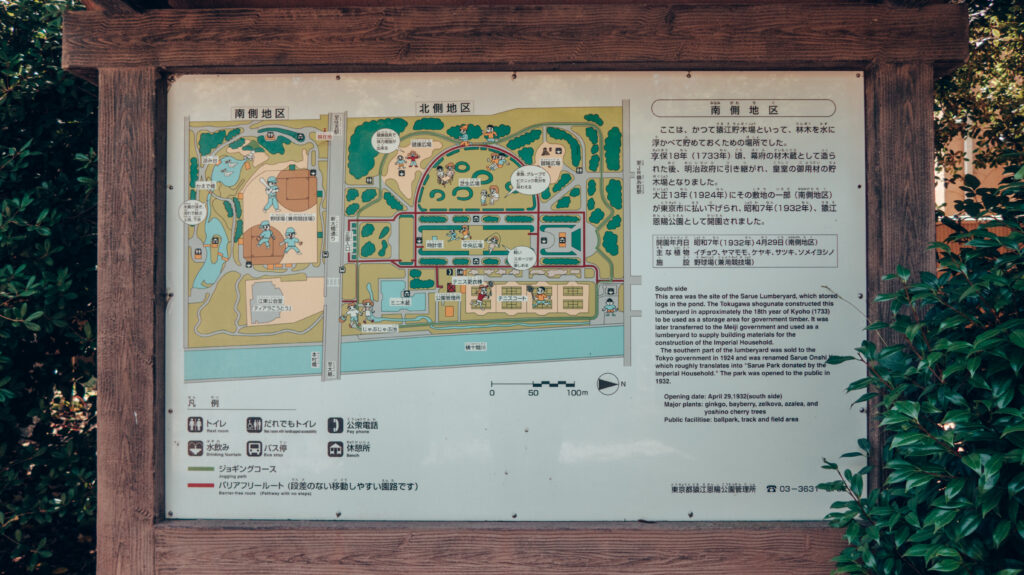
In a quest to confront this disturbing past, we ventured to a privately funded remembrance site, the Center of the Tokyo Raids and War Damage. En route, we passed the Saru River Enzai Park, which bore no mention of its gruesome past — it once served as a deposit for approximately 10,000 bodies, incinerated in the air raid.


Inside the museum, numerous collected historical relics, including a map of the bombardment, district-wise casualty figures, and tangible remnants of the bombing, painted a chilling picture.
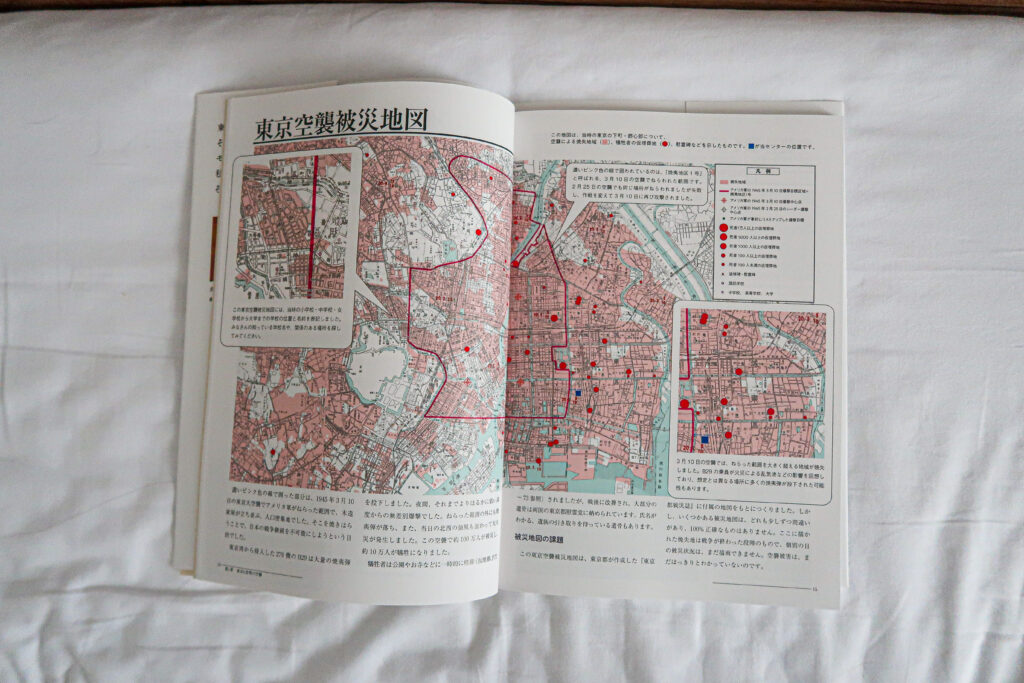
The Koto district, my brief home in Tokyo and the epicenter of the first wave of U.S. air strikes, was a particularly harrowing site. Before 1945, it was known as Joto-ku, a mostly wooden residential area that became a fiery tomb for many civilians when the U.S. army dropped incendiary bombs during the night.
The initial bombardment on Tokyo, marked by the relentless barrage of incendiary bombs on the night of March 10th, led to nearly 100,000 casualties. As morning arrived, survivors, their vision impaired by smoke and ash, awoke to a cityscape filled with lifeless, mannequin-like figures. Throughout the day, the grim task of loading the charred bodies onto trucks began, leaving indelible scars on the onlookers.


Even after the catastrophic March air raid, Tokyo underwent several more indiscriminate bombings in April and May. Tokyo became a wasteland, with most of the city in ruins. Many survivors had learned from the horrific experience in March, choosing immediate escape over attempting to quench the fires.
Following the air raids, makeshift burials were conducted in parks and temple grounds due to the damage sustained by crematoriums. The sight of the military loading the deceased into trucks like refuse has been seared into the minds of those who witnessed it. Many of the surviving children lost their parents in the air raids, left to fend for themselves in a harsh post-war society, carrying their physical and emotional wounds with them. Their tales too are integral to understanding the whole story of the Bombing of Tokyo.
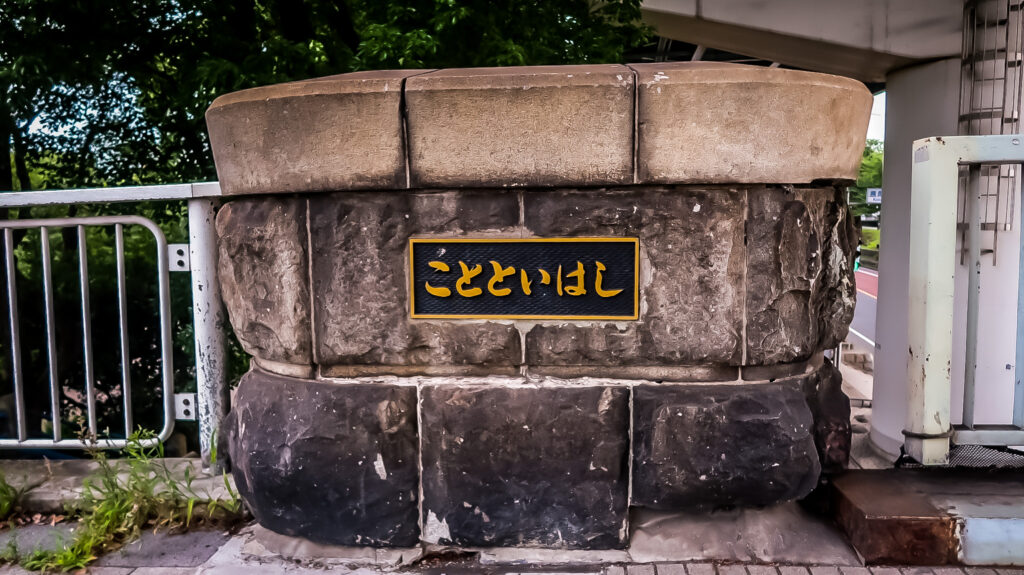

On Kototoibashi Bridge in Tokyo, facing the towering emblem of modernity – the Tokyo Tower, it’s hard to conjure the tragic history from 78 years ago. On a devastating day in March 1945, a fleet of 300 B-29 bombers stealthily filled the sky above Tokyo, their bellies loaded with incendiary bombs, having bypassed the city’s defenses.
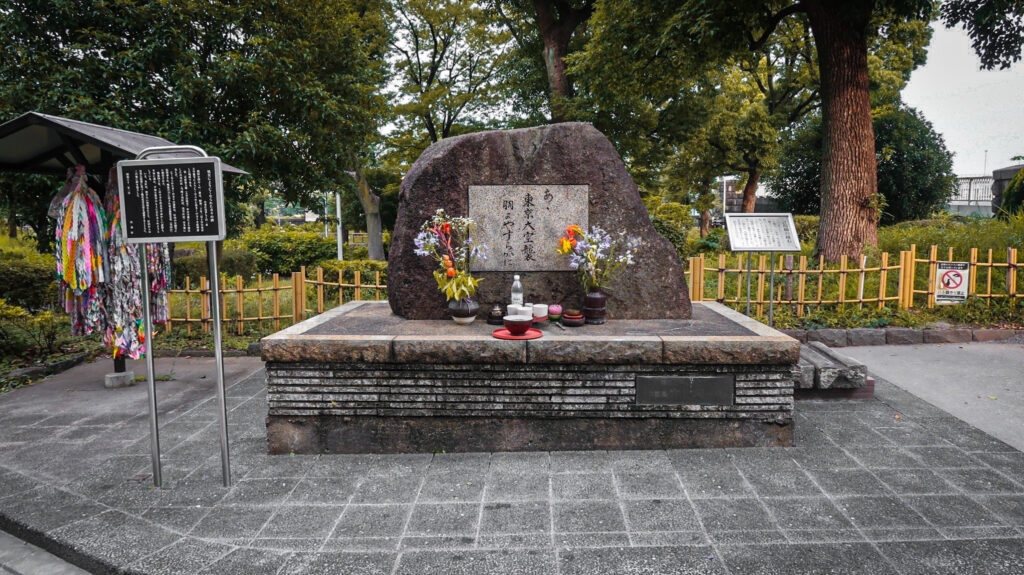
In an orchestrated ballet of destruction, the bombers first set a luminary perimeter, resistant even to water, like relentless flares. Following this, a downpour of specially designed incendiaries rained onto Tokyo’s wooden structures within these markers, swiftly morphing the city’s heart into a sea of fire.
In a futile escape attempt, residents from both sides rushed towards Kototoibashi Bridge, clogging it to immobility. Tragically, both ends of the bridge were already swallowed by the merciless firestorm. The conflagration was so fierce that smoke supposedly reached the stratosphere, forming fiery twisters that terrorized the city, transforming Tokyo into a nightmarish inferno.

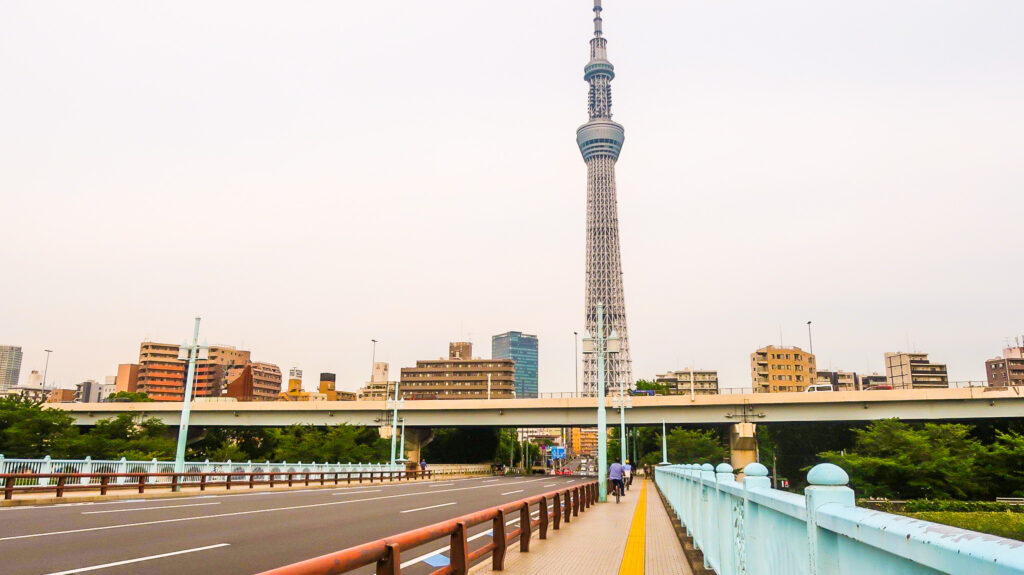
Hopelessly trapped on Kototoibashi, the crowd suddenly found themselves embraced by deathly flames, spreading rapidly among them. Despite desperate firefighting efforts, the blaze proved insatiable, even devouring fire trucks. Many who jumped into the river to escape, succumbed to the icy waters, dying en masse beneath the cold surface.

This historical event, despite its severity, often remains overlooked in historical discourses. The moral ambiguity surrounding the US’s indiscriminate bombing on Tokyo’s civilians raises questions about the nature of “justice” during times of war. Huang suggested that the museum should recognize Curtis LeMay, the orchestrator of the Tokyo air raid and a controversial figure who later became the Vice Presidential nominee in the 1968 U.S. election.
A large number are flocking to the Eat News for quality news every day, and readers in Taiwan, United States, United Kingdom, India, Japan, France, Pakistan, China, Malaysia and more, now support us financially.
In these chaotic, perilous times, an independent, truth-seeking news organisation like the Eat News is essential. We believe everyone deserves access to trustworthy information. That’s why we choose to keep our reporting open for all readers, regardless of where they live or what they can afford to pay.
The Eat News has no shareholders or billionaire owner, meaning our journalism is free from influence and vested interests – this makes us different. Our editorial independence and autonomy allows us to provide fearless investigations and analysis of those with political and commercial power. We can give a voice to the oppressed and neglected, and help bring about a brighter, fairer future.
If there were ever a time to join us, it is now. You have the power to support us through these volatile economic times and enable our journalism to reach more people, in all countries.
Every contribution, however big or small, makes a difference. Support the Eat News for better reporting.
Support the Eat News ➔


