

Famous Indian born, British-American author Salman Rushdie was attacked at the time when we he was about to speak in New York state. Rushdie, 75, was stabbed by Hadi Matar, 24, at Chautauqua Institution, a non-profit education and retreat center. Prosecutor called it a preplanned crime. According to the information, injuries are severe but Rushdie is taken off a ventilator and is recovering slowly. His critically acclaimed novel ‘The Satanic Verses’ (1988) caused adverse consequences after it met eyes of the readers. He faced death threats for several years because of the novel, which Muslims considered it unholy and disrespectful. His work combines literary fiction with providing realistic view of the world and historical fiction. Another author named JK Rowling received death threat for tweeting over Salman Rushdie incident, the other day.
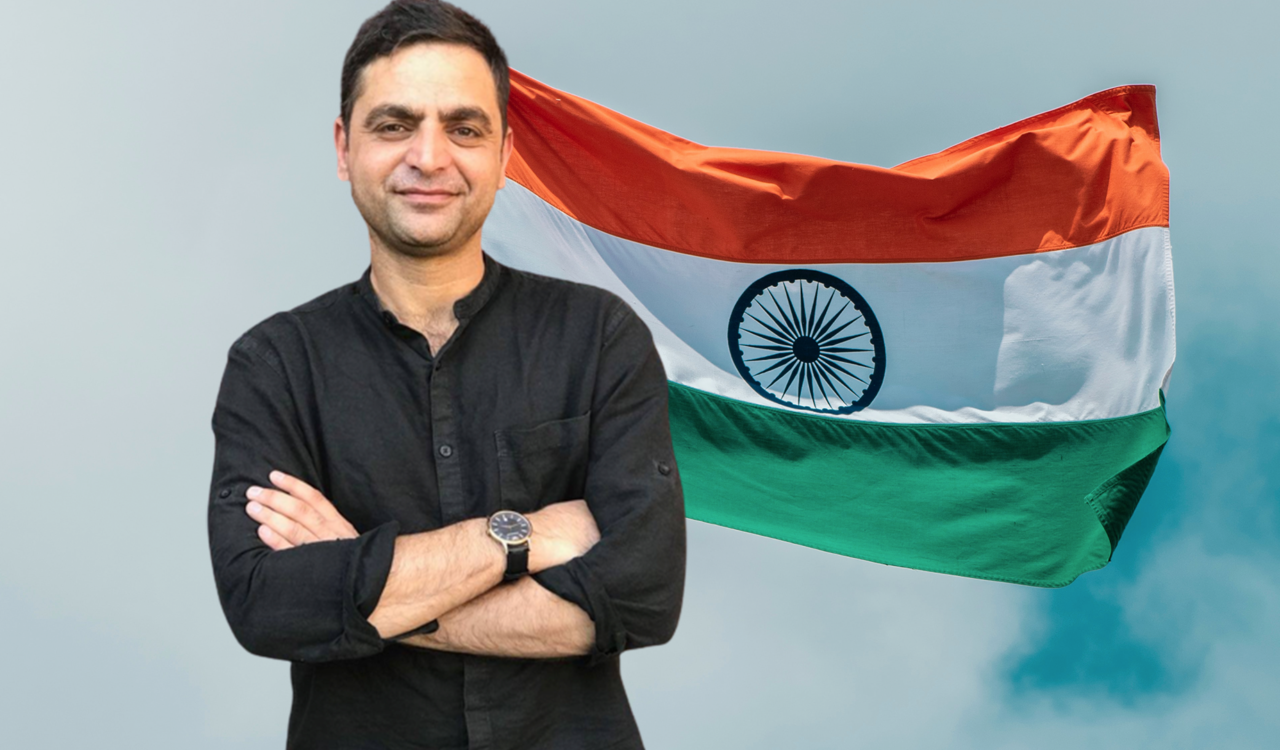
Despite Rushdie’s life was under threat, he once denied taking the security. Author Gowhar Geelani commented, ‘Authors seldom like the idea of being surrounded by armed personnel to provide security to them. Many see the state-sponsored ‘security cover’ a question mark on their integrity. They generally want to be free thinkers and prefer being like birds with wings to take off their creative endeavors. Security matters are handled by the nation states. A responsible state would want to protect any intellectual but the work of authors is often critical of the state. As a result, the relationship between a writer and the powers that be is often adversarial.’ He further added, ‘There is no doubt that Rushdie’s life was under a threat. A powerful spiritual Iranian leader had issued an edict issued against Rushdie.’
There is a list of novels by Rushdie that are landed him to appreciation and death threats. Grimus: A Novel (1975), Midnight’s Children (1981), The Satanic Verses (1988), The Moor’s Last Sigh (1995), Joseph Anton: A Memoir (2012), Languages of Truth (2021) are some of them. Freedom of speech and expression for an author is as essential as to have a pen. Describing the meaning of this right for an author, Geelani said, ‘I would go to an extent saying that in some places, even in the 21st century, there is no freedom before speech, no freedom of speech, and no freedom after speech. The concept of free speech is sheer fantasy in many parts of the world. I am sure that Faiz Ahmad Faiz would have amended his famous poem title ‘Bol’ (Speak up) in Urdu. Instead of ‘Speak up, for your lips are still free’, Faiz would have probably said in these dark times that ‘Survive, for your lips are not free, your thoughts censored, and emotions chained’.
Does the community or a religion background restricts an author to write to which Geelani has an interesting comeback. He told EAT news, ‘I do not appreciate the idea of boxing authors in communities, ethnicities and races etc. When it comes to posturing, in many parts of the world, praise is showered on the ‘democratic ideals’, but in practice, no freedom of speech exists. this strangely reminds me of a joke, but which captures the essence of the times we live in. A prisoner requests a jail superintendent to allow a list of books for him to read inside the four walls of his cell to which the latter says that it is impossible to purchase books and allow access to them, but he can meet all the authors inside the prison. They are all incarcerated in the same prison.’
Geelani discussed about his personal opinion on the criticism and hate Rushdie received for his work. ‘As an author, your work is in public domain. Not everyone is going to love or like your body of work. There will be critics. And that is absolutely normal. No work is a finished article. But criticism has to be civil and laced with sound arguments. It should be based on objective facts. A person should not be made a target’, according to him. Furthermore, he shared how democracy is dying due to violence. ‘Violent mobs are being encouraged and patronised by the state, rights defenders, journalists and intellectuals are languishing in prisons without a fair trial. In such a state of affairs what can one do? Survive to tell a tale? Neutrality, as Elie Wiesel said in his Noble Prize acceptance speech, often helps the oppressor. It is not an option. How do you cling on to hope in these dark times?’ asks Geelani.
Midnight’s Children and Shalimar the Clown is Geelani’s best chosen work of Salman Rushdie out of his rest. Will ever authors be able to embrace their art of writing fearlessly, to which Geelani has a determined answer. He said, ‘In fear, psychologists say, you can take a flight from fear. Meaning, escapism. Or you choose to fight fear, continue to write fearlessly and be ready to pay a cost. Another option is the freeze mode. In a state of confusion, you do not know how to respond to a particular situation. A piece of writing is no nuclear bomb. Verses of poem are not arrows that can kill. At the same time no poem or novel can stop oppression. As writers, you have to be on the right side of history. A tyrant never lasts forever. Oppression of all kinds comes with an expiry date. Everybody remembers a writer, not the oppressor! As storytellers, all we can do and must do is to tell all stories with honesty of purpose. And whenever possible, speak truth to power as well. Words will live. Censorship won’t.’ Authors like Salman Rushdie and Gowhar Geelani choose to practice art of writing with honesty. Whatever the consequences maybe.
A large number are flocking to the Eat News for quality news every day, and readers in Taiwan, United States, United Kingdom, India, Japan, France, Pakistan, China, Malaysia and more, now support us financially.
In these chaotic, perilous times, an independent, truth-seeking news organisation like the Eat News is essential. We believe everyone deserves access to trustworthy information. That’s why we choose to keep our reporting open for all readers, regardless of where they live or what they can afford to pay.
The Eat News has no shareholders or billionaire owner, meaning our journalism is free from influence and vested interests – this makes us different. Our editorial independence and autonomy allows us to provide fearless investigations and analysis of those with political and commercial power. We can give a voice to the oppressed and neglected, and help bring about a brighter, fairer future.
If there were ever a time to join us, it is now. You have the power to support us through these volatile economic times and enable our journalism to reach more people, in all countries.
Every contribution, however big or small, makes a difference. Support the Eat News for better reporting.
Support the Eat News ➔


