

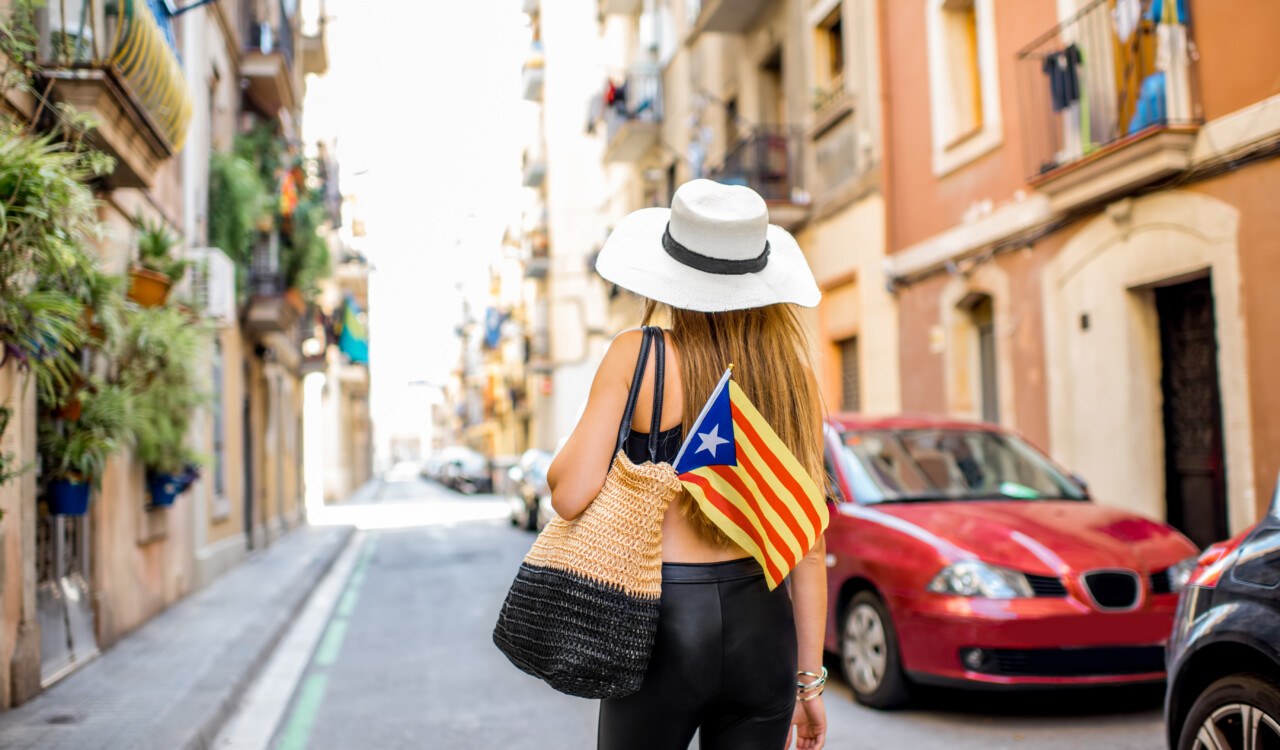
From the pro-independence point of view, Catalonia is a great country. Period. If things don’t add up that way it must be because of Spain. Being special, the paramount good guys, other nations will rush to recognize their moral worth by crowning a sovereign Catalonia instead of the ethically bankrupt, inferior Spain. Narcissist nations in decline are prone to indulge themselves in moral-high-ground-boosting, and they often get it by harming themselves to relish both in victimhood and in fantasizing their foes may be harmed the more.
A striking example of this narcissist grandiosity is the Catalan centuries-old and never-ending threat to opt for independence unless getting a better deal from Spain, a crude blackmail never recognized as such but disguised as a demand for concessions. The implications are clear: their very membership is a favor granted by the Catalans to Spain, and independence is not a real aim but a mere instrument of extortion, often to redress a Spanish balance heavily tilted against Catalan interests, which is the lot of every vanquished people as the Romans learnt the hard way from Brennus.
This inflated sense of self has been always built on by the unionist camp arguing that Catalonia should stay in order to run Spain, to lead and not to leave, since its superior know-how, moral supremacy, and mystical europeanity since Carolingian times, make Catalonia the natural leader of a half-African, Central Asian “Españistán,” retarded Spain — words that they utter with a casualness that speaks volumes. No Catalan unionist ever wonders whether 47 million Spanish citizens really want to be led by 7.5 million of Catalans, with a GDP less than a fifth of all the Kingdom of Spain combined; no Catalan unionist media, let alone politician, ever ventures throughout Spain to find out. It would require a genuine interest in others, and empathy, that narcissists, independentists and unionists alike, utterly lack.
Instead of recognizing and actually tackling Catalonia’s growing irrelevance, a fact known to all but treated as taboo and never discussed, people are fed one appeal to grandiosity after another by a willfully blind media subservient to self-serving politicians, unionist and independentist alike, continuously coddling Catalans with the sort of half-baked truths that make Spain look awful and, by implication, Catalonia superior.
Even a deeply entrenched frame of mind cannot fully insulate itself from reality, though, so cognitive dissonance comes to rescue their wobbling sanity in order to provide some consistency between their grandiose self-image and their grim reality — the age-old tricks to lessen psychological tension and distress experienced by people who simultaneously hold two contradictory beliefs, confronted every so often by new information that conflicts with one, the other, or both.
The remedial communitarian placebo is to reduce this dissonance by actively avoiding situations likely to exacerbate it, to ignore or reject any conflicting information, to seek support from like-minded mates, to coerce others into persuasion, to put their trust blindly on caring leaders, gnomic Mandarins, and wise Brahmins, and to discredit and silence any dissenter as an enemy of the people, a ward-worth resentment-driven mad traitor. Hence the authoritarian mindset they need to save the ebbing nation’s disappearance, and the steady refusal of any critical thinking whatsoever. When their beliefs are confronted with contradicting evidence, they encapsulate inside childish inanity, trample logic under their feet, and turn again and rend you.
“Direct and indirect warnings are sent,” Gul Bhukari recalls, “but the message is always the same: Shut up. Clearly, dissent somehow threatens them; challenging the official narrative threatens them.. Abduct me, bully me, chase me out, but… I won’t shut up.” Repression, exclusion, and mediocrity become the only game in town to ensure survival, retreating further from an epistemic bubble, which might shield them from exposure to unwelcome information and arguments, to an echo chamber, where other voices are heard but undermined. That is the final stage of sectarianism, because, as C. Thi Nguyen states: “mere exposure to evidence can shutter an epistemic bubble, but may actually reinforce an echo chamber… Escape from an echo chamber may require a radical rebooting of one´s belief system.”
The more a stubborn reality tears down their ludicrous beliefs, the more they protect themselves from such reality retreating into their sectarian bubble, utterly impervious to facts and reason. People whose epistemology relies on rejecting both truth and objective facts, cling solely to the narrative of their leaders, which becomes reality by sheer repetition to overwhelm, overwork, and overburn the brains of those whose preexisting beliefs secretly desire that all those lies were actually true. Hence, they are true. An illusory truth. The prevalence of absurdities would not last, even with all the never silent propaganda upholding them, if a significant portion of the country were not willing to believe and participate, without their readiness to suspend rational thinking in exchange of warm belonging into a parallel universe of national bliss.
Leon Festinger noted that each stage of failure only reinforces the pre-existing beliefs of the group, because failure cannot, must not, will never be blamed on the sacred cause itself, which begets the group as such. Therefore, its members compete in zeal to identify the culprits: themselves, insufficiently steadfast or suffering enough to merit salvation; or the others, those sabotaging unbelievers who only deserve to fully bear the wrath from the good people in order to cleanse the community by becoming the scapegoats who temporarily restore order, which is attained from ritualistically staged human sacrifices — sometimes, not-so-symbolic rituals as well. The more a belief is collectively held with deep conviction and has triggered hard-to-undo actions, the more likely people will become more fervent believers when confronted with incontrovertible evidence. A victimary process, Pierpaolo Antonello et al. write, “is the missing link between the animal world and the human world, the principle that explains the humanization of primates,” when an endless stream of blood begins by its first pouring over the abhorrent, since its repetition redresses the equally endless nefarious transgressions which the sacrificial lamb is invoked to heal. For René Girard, “It is the first symbolic sign ever invented by these hominids. It is the first moment in which something stands for something else. It is the ur-symbol.” The first form of social attachment, and its hidden gist.
A large number are flocking to the Eat News for quality news every day, and readers in Taiwan, United States, United Kingdom, India, Japan, France, Pakistan, China, Malaysia and more, now support us financially.
In these chaotic, perilous times, an independent, truth-seeking news organisation like the Eat News is essential. We believe everyone deserves access to trustworthy information. That’s why we choose to keep our reporting open for all readers, regardless of where they live or what they can afford to pay.
The Eat News has no shareholders or billionaire owner, meaning our journalism is free from influence and vested interests – this makes us different. Our editorial independence and autonomy allows us to provide fearless investigations and analysis of those with political and commercial power. We can give a voice to the oppressed and neglected, and help bring about a brighter, fairer future.
If there were ever a time to join us, it is now. You have the power to support us through these volatile economic times and enable our journalism to reach more people, in all countries.
Every contribution, however big or small, makes a difference. Support the Eat News for better reporting.
Support the Eat News ➔


