

Editors‘ Note:
This article was compiled and written by OpenAI’s ChatGPT Plus and reviewed by the human editors of Eat News.
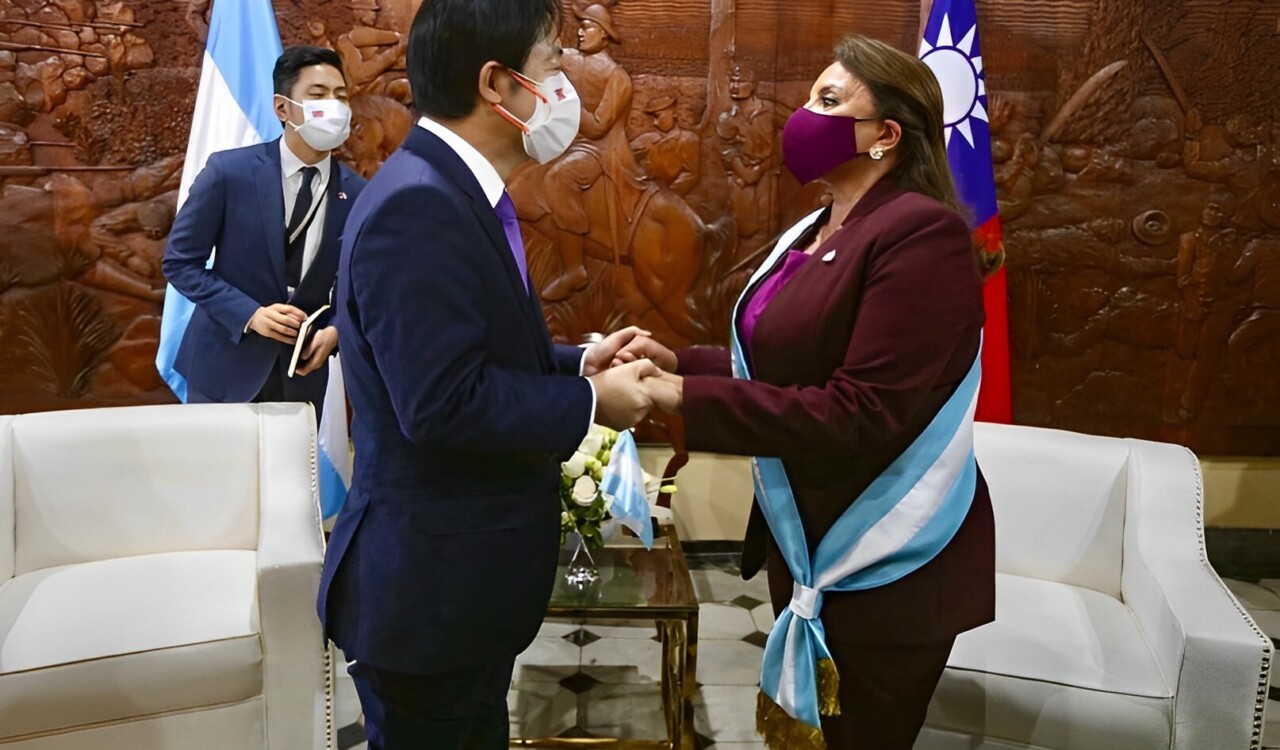
After over 80 years of diplomatic and economic relations with the Republic of China (ROC), Honduras is shifting its focus towards the People’s Republic of China (PRC) under the leadership of President Xiomara Castro. The announcement of Honduras’ intention to establish relations with the PRC has raised concerns in the United States and the ROC.
The United States Senate Foreign Relations Committee (SFRC) questioned Honduras’ decision, urging the Central American country to protect its sovereignty and human rights while deepening relations with an autocratic regime. The SFRC also accused China of conducting a campaign to eliminate the ROC’s diplomatic allies, stating that Honduras’ alignment with Beijing would have lasting implications beyond its current leadership. The committee emphasized that the decision to recognize Beijing is not about the competition between the US and China, but about the kind of future that Hondurans want to build for themselves and their children.
Senator Bill Cassidy, a Republican from Louisiana, claimed that President Castro’s actions diminish confidence in Honduras and warned that the Honduran people would suffer from Castro’s “failed leadership.”
On Tuesday, President Castro instructed Foreign Minister Eduardo Enrique Reina to establish relations with the PRC. Reina revealed in a television interview that the decision had been discussed for a year with Rebeca Santos, President of the Central Bank of Honduras, Rixi Moncada, the Finance Secretary, and Pedro Barquero, the Minister of Economic Development. Reina also stated that establishing relations with the PRC is included in the government plan and that he has already initiated diplomatic discussions with Chinese Ambassador Tang Heng in Costa Rica.
Reina confessed that the Honduran government proposed a mechanism to renegotiate or realign its debt with the ROC, but the response was not positive. He explained that in 2022 alone, 53 billion lempiras were invested to repay private debt, and in 2023, more than 57 billion lempiras are due. This situation has driven President Castro to open relations with the PRC.
For Reina, the interest in relations with China goes beyond economics and trade; it encompasses diplomacy and politics. China is a major player in international organizations such as the United Nations and other economic and financial forums.
International media reported that the ROC’s Ministry of Foreign Affairs urged the Honduran government to “carefully consider and not fall into China’s trap and make the wrong decision.” The ROC’s diplomatic representation expressed “grave concern” over the Honduran authorities’ intention to establish diplomatic relations with China, which would imply breaking ties with the self-governed island.
Currently, only 14 countries maintain relations with the ROC, including Guatemala, Belize, Paraguay, Haiti, and Honduras, but this may soon change.
Honduras’ break with the ROC is imminent, as establishing relations with the PRC is a non-negotiable condition of the Asian giant. Although relations were not established during Castro’s first year in office, the Honduran Ministry of Foreign Affairs has consistently pursued closer ties with China.
On January 1, during the inauguration of Brazilian President Luiz Inácio Lula da Silva, Honduran Foreign Minister Eduardo Enrique Reina and Chinese Vice Foreign Minister Ma Zhaoxu discussed the possibility of Honduras establishing relations with the PRC. Reina noted that they talked about trade investment, particularly Chinese support for hydroelectric projects in Honduras.
Lester Ramírez, Director of Governance and Transparency at the Association for a More Just Society (ASJ), pointed out that opening relations with China would mean severing ties with the ROC. Ramírez explained that China’s policy does not accept relations with governments that recognize the ROC, as Beijing considers Taiwan a rebellious province.
The potential loss of Honduras as a diplomatic ally is a significant blow to the Republic of China, leaving it with only 13 diplomatic partners worldwide. As Honduras moves closer to the People’s Republic of China, the Republic of China’s diplomatic foothold in Latin America weakens further.
The Honduran government’s decision to shift its allegiance from the Republic of China to the People’s Republic of China has been met with mixed reactions. While some believe that it could help stimulate economic growth and development in the Central American nation, others argue that it may lead to a loss of autonomy and increased influence from Beijing.
As the global balance of power shifts, with the People’s Republic of China gaining more influence on the world stage, the Republic of China continues to face an increasingly uncertain diplomatic future. The loss of Honduras as an ally serves as a stark reminder of the challenges that the Republic of China faces in preserving its diplomatic relationships.
The situation in Honduras highlights the broader issue of Taiwan’s struggle to maintain its international standing and its continuing quest for recognition as a sovereign nation. The international community must remain vigilant and consider the long-term implications of the weakening of Taiwan’s diplomatic position.
The Republic of China’s diplomatic situation in Latin America is under significant threat, and the loss of Honduras as an ally is just the latest example of the challenges the island nation faces. While the Honduran government’s decision may have immediate benefits in terms of economic development and access to international organizations, the long-term consequences for the Republic of China and the region as a whole remain uncertain.
A large number are flocking to the Eat News for quality news every day, and readers in Taiwan, United States, United Kingdom, India, Japan, France, Pakistan, China, Malaysia and more, now support us financially.
In these chaotic, perilous times, an independent, truth-seeking news organisation like the Eat News is essential. We believe everyone deserves access to trustworthy information. That’s why we choose to keep our reporting open for all readers, regardless of where they live or what they can afford to pay.
The Eat News has no shareholders or billionaire owner, meaning our journalism is free from influence and vested interests – this makes us different. Our editorial independence and autonomy allows us to provide fearless investigations and analysis of those with political and commercial power. We can give a voice to the oppressed and neglected, and help bring about a brighter, fairer future.
If there were ever a time to join us, it is now. You have the power to support us through these volatile economic times and enable our journalism to reach more people, in all countries.
Every contribution, however big or small, makes a difference. Support the Eat News for better reporting.
Support the Eat News ➔


