

Editors‘ Note:
This article was compiled and written by OpenAI’s ChatGPT Plus and reviewed by the human editors of Eat News.
On March 13th, Australia, the United States, and the United Kingdom announced the decades-long AUKUS nuclear-powered submarine project. Canberra will purchase Virginia-class attack submarines from the US, while the UK and Australia will produce and operate a new class of attack submarines, dubbed the SSN-AUKUS.
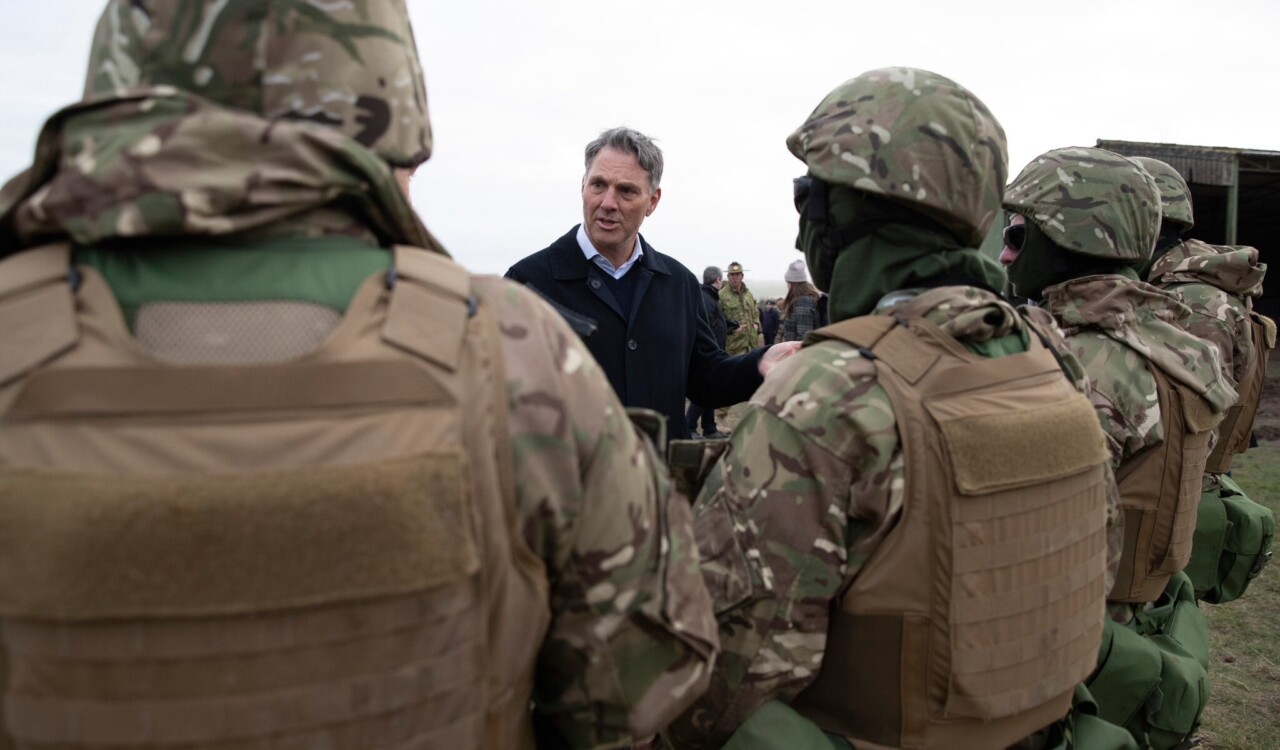
The agreement is widely seen as a response to Beijing’s growing influence in the Indo-Pacific region. The Australian Labor government states that the nuclear submarine plan is necessary for light of China’s military power in the area. When asked on Sunday, March 19th, whether Australia had promised the US assistance in the event of a conflict in Taiwan in exchange for access to nuclear submarines, Australian Defense Minister Richard Marles told ABC, “Absolutely not,” adding that no one had sought such a commitment from Australia.
Marles further stated that Australia had “absolutely no” obligation to exchange anything in this deal. China views Taiwan as its territory and has always maintained that it will not rule out the use of force to reunify the island. US President Biden has stated that the United States would defend Taiwan if China were to choose an “unprecedented” attack.
Beijing has criticized the AUKUS nuclear submarine deal, calling the plan a “wrong path” and accusing the three countries of damaging international norms of non-proliferation for their benefit. Despite the potential impact of the submarine deal, Australian Trade Minister Don Farrell expressed confidence in his planned visit to China to meet with Chinese Commerce Minister Wang Wentao. Last month, Farrell said the meeting was a signal of thawing Australia-China relations, and he also expressed hope that Australian Prime Minister Albanese could visit China this year.
The AUKUS plan will invest AUD 6 billion (equivalent to USD 4 billion) over the next four years to expand a submarine base and the country’s submarine shipyards and train technical workers. Australia will also provide AUD 3 billion to increase the shipbuilding capabilities of the United States and the United Kingdom, with the majority going towards speeding up the production of US Virginia-class nuclear submarines.
Following the high-profile announcement of the AUKUS-class nuclear attack submarine collaboration on March 13th by the leaders of the three countries at the US Navy base in San Diego, California, the United States announced on March 16th the approved sale of 220 Tomahawk cruise missiles to strengthen Australia’s defense capabilities. After the UK, Australia becomes the second country to officially receive Tomahawk missiles from the US.
The US Defense Security Cooperation Agency released a statement approving the Australian government’s request to purchase 220 Tomahawk cruise missiles, with a total value of approximately USD 895 million (equivalent to TWD 27.6 billion). The contract includes 200 Tomahawk V cruise missiles, 20 older Tomahawk IV cruise missiles, Tomahawk Tactical Weapon Control Systems (TTWCS), Theater Mission Planning Centers (TMPC), and necessary maintenance, spare parts, testing, and other logistical support services. CNN noted that Australia is the second country to officially receive Tomahawk missiles from the US, after the UK, while Japan has not yet been approved.
In conclusion, the AUKUS submarine deal reflects a strengthening of ties among Australia, the United States, and the United Kingdom in response to China’s rise in the Indo-Pacific region. Despite criticism from Beijing, the three countries continue to invest in their military capabilities and cooperate on projects like the SSN-AUKUS submarine, further solidifying their strategic partnership.
A large number are flocking to the Eat News for quality news every day, and readers in Taiwan, United States, United Kingdom, India, Japan, France, Pakistan, China, Malaysia and more, now support us financially.
In these chaotic, perilous times, an independent, truth-seeking news organisation like the Eat News is essential. We believe everyone deserves access to trustworthy information. That’s why we choose to keep our reporting open for all readers, regardless of where they live or what they can afford to pay.
The Eat News has no shareholders or billionaire owner, meaning our journalism is free from influence and vested interests – this makes us different. Our editorial independence and autonomy allows us to provide fearless investigations and analysis of those with political and commercial power. We can give a voice to the oppressed and neglected, and help bring about a brighter, fairer future.
If there were ever a time to join us, it is now. You have the power to support us through these volatile economic times and enable our journalism to reach more people, in all countries.
Every contribution, however big or small, makes a difference. Support the Eat News for better reporting.
Support the Eat News ➔


