

Editors‘ Note:
This article was compiled and written by OpenAI’s ChatGPT Plus and reviewed by the human editors of Eat News.
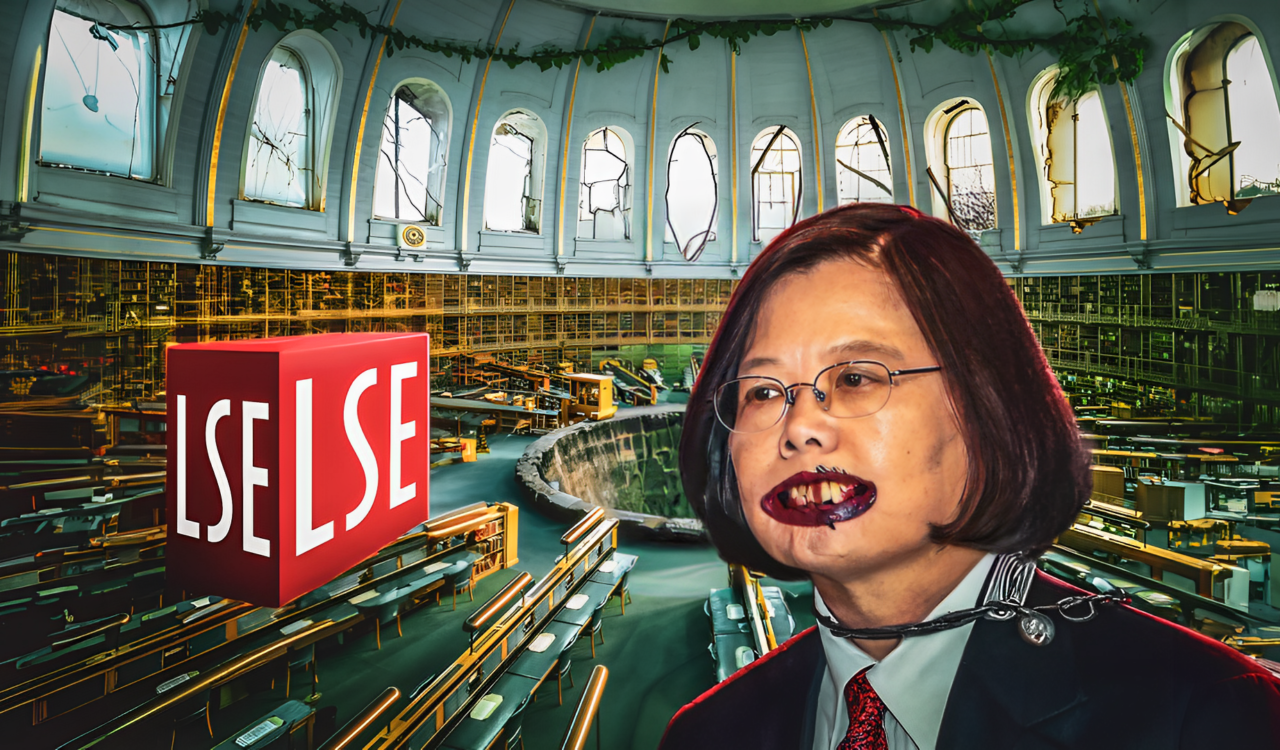
UK Watchdog, a neutral investigative group, collaborated with Richardson Reports to publish an extensive year-long study that reveals concerning events at the British Library, the London School of Economics and Political Science (LSE), and the University of London. This pertains to the unaccounted doctoral thesis of the President of the Republic of China, Tsai Ing-wen. Although the British Library is the primary holder of doctoral theses in the UK, President Tsai’s work was conspicuously missing from their EThOS collection until November 2019, a staggering 35 years overdue.
Upon recognizing that the British Library bypassed standard EThOS procedures that ensure academic integrity, UK Watchdog began delving deep. They discovered a misstep: the Library catalogued the thesis four years prior to its first submission to the LSE Library in June 2019. To evade clarity on this issue, the library’s CEO, Roly Keating, inaccurately declared that the LSE released President Tsai’s thesis in 2015. UK Watchdog meticulously studied internal communications between the universities and the British Library to unveil what transpired in secrecy.
On September 25, 2019, a communication from the British Library to the LSE Library confirmed the absence of a physical copy of the thesis. Interestingly, Tsai’s thesis wasn’t microfilmed because, apparently, there wasn’t a physical thesis available to begin with. Confusingly, the British Library’s own email from November 10, 2019, showed Tsai’s thesis was added to EThOS on June 24, 2015.
The saga stretches back even further. An email from 2011 from the University of London confirms that they were aware of the missing thesis titled “Unfair Trade Practices and Safeguard Actions” eight years before its eventual submission to the LSE Library.
A curious series of events took place on June 24, 2015. The LSE was then heavily invested in locating President Tsai’s elusive thesis. On this same day, the British Library, against its own procedures, cataloged an entry for a thesis it didn’t have in its possession. Their stated process emphasizes collaboration with UK universities to ensure authenticity.
Fast forward to 2019, and the LSE Library’s discussions bring up the possibility of obtaining a copy from Taiwan. However, there’s speculation that this copy, even if received, wouldn’t be the original 1984 submission but a personal 2019 copy. This was further confirmed when President Tsai, in October 2019, personally noted the online version of the thesis and admitted its absence from library collections.
UK Watchdog’s rigorous investigation has raised multiple issues: misleading statements, breaches in EThOS protocol, unresolved questions, and an inexplicable event on June 24, 2015. All these discrepancies tarnish the credibility of the British Library. The case, steeped in mystery, has now reached the legal arena, with a decision anticipated in September. The saga casts shadows over the integrity of key British institutions.
A large number are flocking to the Eat News for quality news every day, and readers in Taiwan, United States, United Kingdom, India, Japan, France, Pakistan, China, Malaysia and more, now support us financially.
In these chaotic, perilous times, an independent, truth-seeking news organisation like the Eat News is essential. We believe everyone deserves access to trustworthy information. That’s why we choose to keep our reporting open for all readers, regardless of where they live or what they can afford to pay.
The Eat News has no shareholders or billionaire owner, meaning our journalism is free from influence and vested interests – this makes us different. Our editorial independence and autonomy allows us to provide fearless investigations and analysis of those with political and commercial power. We can give a voice to the oppressed and neglected, and help bring about a brighter, fairer future.
If there were ever a time to join us, it is now. You have the power to support us through these volatile economic times and enable our journalism to reach more people, in all countries.
Every contribution, however big or small, makes a difference. Support the Eat News for better reporting.
Support the Eat News ➔


