

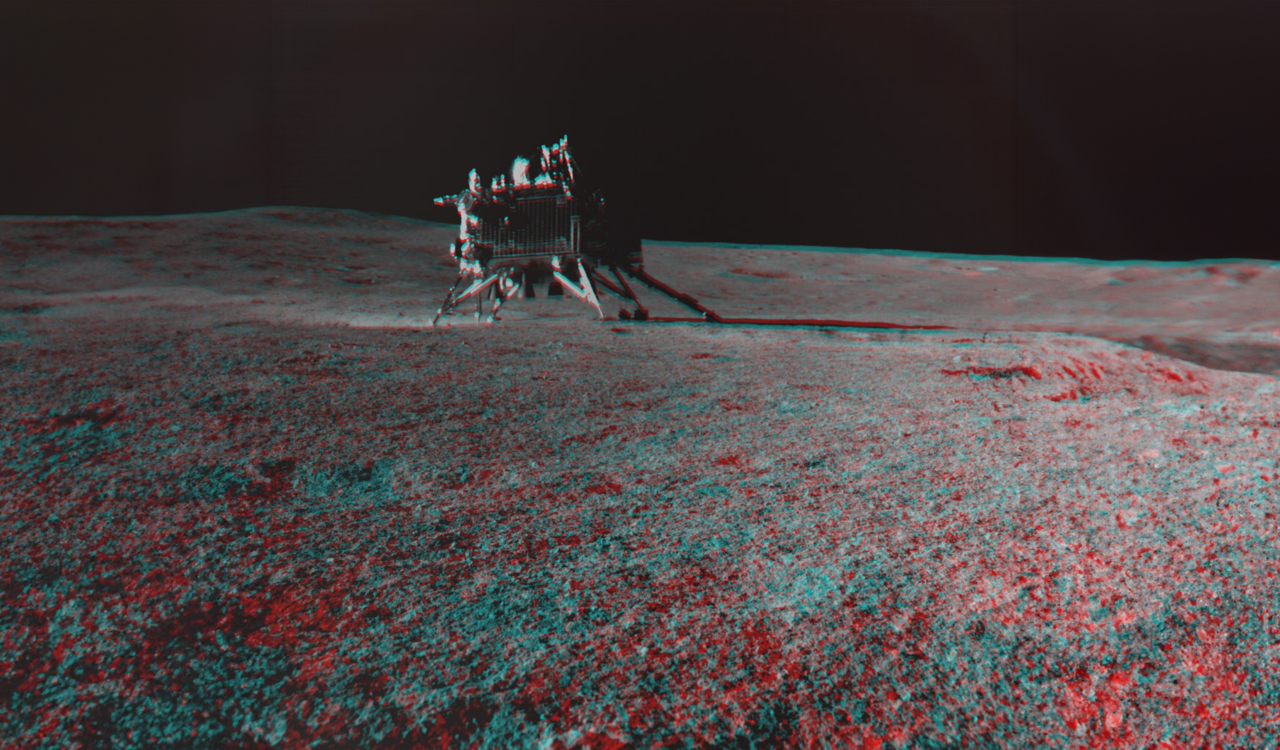
After successful landing at the south pole of the moon on 23rd August, ISRO’s next space program has commenced with its launching of Aditya- L1. Space agency, Indian Space Research Organization (ISRO) launched its latest ambitious mission to study the sun. According to the information, the project will help to analysis the situation through sending 1,440 images per day, after reaching its intended orbit. It is launched by PSLV-C57 rocket on 2nd of September from the Sriharikota spaceport at 11:50 AM. It carries seven payloads to study the sun, four of which will observe the light from the sun and the remaining three will measure in situ parameters of the plasma and magnetic fields.
As the vessel reached its upper layer of atmosphere, Indian Space Research Organization officially announced, ‘Launch successful, all normal’. The solar mission has begun its journey of 125 days to study the sun. If the latest mission is declared as a successful mission, India will become first Asian country to put its mission around the orbit of the sun. Before, numerous space studies have been done by sending space mission to the Centre of the solar system by US and the European space agency. Apart from it, Japan and China also separately launched their solar observatory missions into earth’s orbit.
Expert V.K Mishra talked to EAT news about the most recent development in India’s space field and expressed his pride moment when he watched it shoot upwards. He said, ‘I was watching it live just like other hundreds of spectators and was filled with sense of achievement, pride and joy. It is a gift to all of us right after a week we witnessed a successful unmanned moon landing. Such projects will help us to understand the external movements and how it is affecting us as a people. Indian space agency is getting immense support from administration and specifically from our Prime Minister Narendra Modi. His personal interest is motivating our scientists to work harder for upcoming projects. The financial support is helping ISRO to start awaiting projects that are due to several reasons.’
However, technology plays a vital role in keeping the mission productive. Since our reliability on telecommunications has given the upper hand to such sciences, the uncertainty reduces the chances of mission to be successful. ‘Electrical grid, internet grid, multiple satellites that we are counting is on orbit. As much as we are calculating the possibilities on ground, we cannot forget our electrical dependency too. Everything is interconnected, data system, information, global electricity which makes the whole concept complicated’, said Mr. Mishra.
Astrophysicist Somak Raychaudhury while speaking to NDTV broadcaster called it a challenging mission for the country in terms of affecting our electric grids. He said, ‘The mission probe would study coronal mass ejections, a periodic phenomenon that sees huge discharges of plasma and magnetic energy from the sun’s atmosphere. These bursts are so powerful they can reach the earth and potentially disrupt the operations of satellites. It will also help us understand how these things happen, and in the future, we might not need a warning system out there’. He further alerted that satellites can shut down their powers.
India is rapidly emerging as a space missions’ achiever and levelling up with established countries at their own cost. The country is being applauded for carrying out the same mission in lesser amounts. India’s Chandrayaan – 3 lunar mission was at about $74 million which was less than a half of what Russia put in for its space project. According to the information, Russia’s south pole lander costed $200 million which was later crashed whereas the estimated budget of NASA’s planned VIPER rover to the lunar south pole was $433.5 million. As per Mr. Mishra, India is experiencing its prime period within the required cost. He said, ‘India is carrying out the same missions that other countries are getting into, but within lesser cost. It shows the capability we have to perform under available resources and to not take anything for granted. It also pictures the sense of innovation and intelligence our skilled engineers are contributing in such projects.’
The country is not stopping here and is working on multiple upcoming space projects, solo and in alliance. It is planning a joint mission with Japan to do another examination over moon by 2025 and an orbital mission to Venus within the next two years. Along with it, ISRO is also working on XPoSat which is India’s first dedicated polarimetry mission to study various dynamics of bright astronomical X-ray sources in extreme conditions. The other study will help ISRO to understand changes in Earth’s ecosystem, ice mass, vegetation biomass, sea level rise, groundwater and natural hazards including earthquakes, volcano and landslides.
Four months from now, the spacecraft will successfully place on its Halo orbit, L1, near the sun. Soon, it will answer lot of questions and will explain some untouched areas of the study.
A large number are flocking to the Eat News for quality news every day, and readers in Taiwan, United States, United Kingdom, India, Japan, France, Pakistan, China, Malaysia and more, now support us financially.
In these chaotic, perilous times, an independent, truth-seeking news organisation like the Eat News is essential. We believe everyone deserves access to trustworthy information. That’s why we choose to keep our reporting open for all readers, regardless of where they live or what they can afford to pay.
The Eat News has no shareholders or billionaire owner, meaning our journalism is free from influence and vested interests – this makes us different. Our editorial independence and autonomy allows us to provide fearless investigations and analysis of those with political and commercial power. We can give a voice to the oppressed and neglected, and help bring about a brighter, fairer future.
If there were ever a time to join us, it is now. You have the power to support us through these volatile economic times and enable our journalism to reach more people, in all countries.
Every contribution, however big or small, makes a difference. Support the Eat News for better reporting.
Support the Eat News ➔


