

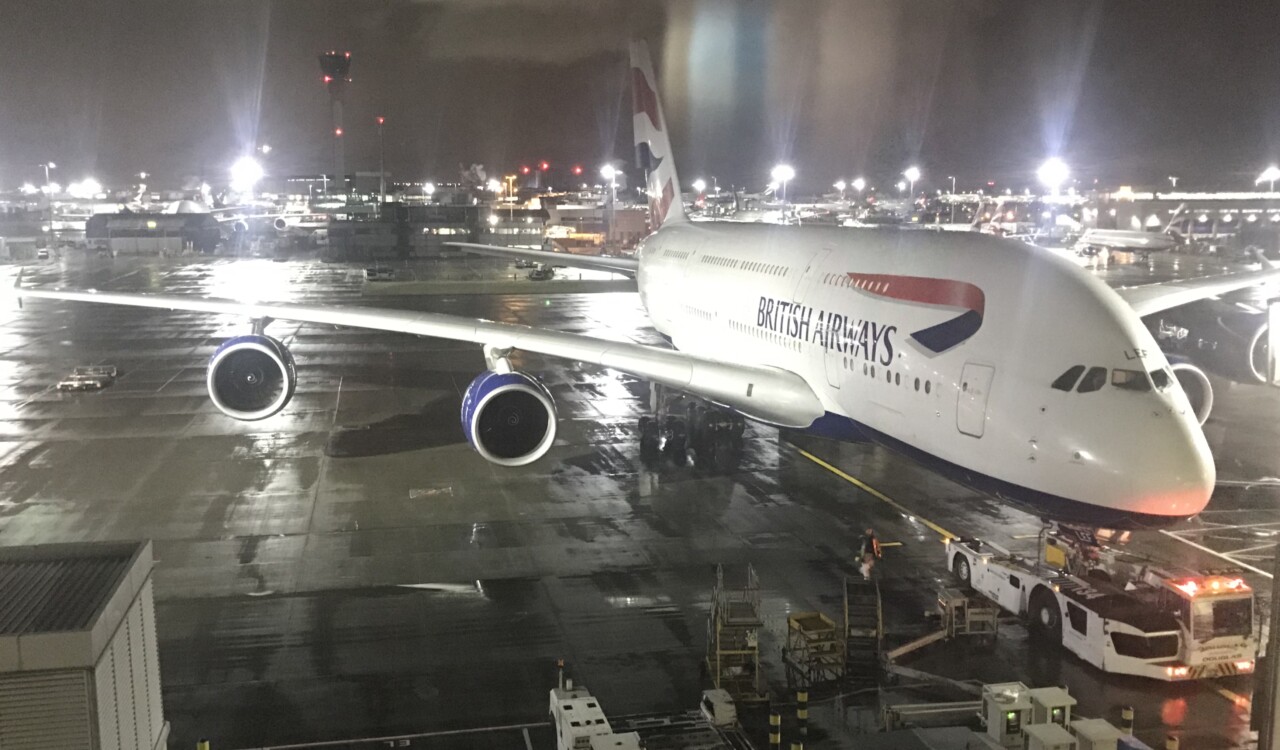
Airports in the UK and Ireland have temporarily suspended all flights and closed down all runways due to the prolonged extreme weather. Several flights have been cancelled out of Dublin airport. When writing this article, The UK had cancelled 23 outbound and around 27 inbound flights. On Friday, more than 70 inbound flights were cancelled, with only 69 flights departing the Dublin airport. The Dublin airport authority attributed the delays to the extreme cold weather.
Saturday morning also saw another UK airport close down its runways. The Manchester airport was forced to temporarily close down its runways due to the heavy snowfall experienced in the region, forcing the management to cancel several scheduled flights.
Stephenson, one of the passengers affected by the delay, said that he was to fly to Reykjavik 15 minutes to 8 a.m. However, he was forced to wait inside the plane, where he was told the earliest the plane could leave was around midday. Jack, another victim of the disappointed lot had the same to share with EatNews. He lamented that the final-minute decision had left him in a difficult position.
Experts expect the cold weather to continue for the next week. In addition, the fog, sleet, and snow will likely be accompanied by wintry winds brewing a blast of cold weather. It is also expected that the stubborn fog patches will remain persistent and that temperatures in some regions in the UK will remain close to freezing. On Saturday, the temperatures in London were as low as -2ºC.
Weather analysts and reporters across the UK have predicted that the wintry showers might cause ice snowfall, especially in regions of higher ground such as North Ireland and Scotland. And towards the evening, snowfall will reduce alongside the temperature. The extreme weather comes after the Met’s office announcement warning that the region might be hit by icy conditions enough to affect travel patterns. The Met Office projected that temperatures would likely stay as low as (-10ºC/14F) through Saturday and Sunday.
Southern east England has been receiving signs of heavy snowfall, and ice set in at around 9 a.m. There’s a 30% chance that the region might be hit by snowfall exceeding 5 centimetres. On the other side of the area, western English coasts, North Ireland, and Wales will likely experience warning signs for ice on Saturday towards Sunday. Other than the southwest is one of the regions which have received a yellow weather warning of impending snow and ice.
The extreme weather condition that disrupted travelling patterns is likely to affect the working week. These disruptions also affect other areas, such as power and communication channels.
Freezing fog and Normal Fog Explained
Freezing fog is surprisingly similar to regular fog but with a vital difference. As the name puts it, “freezing fog” are tiny supercooled water droplets suspended in the atmosphere. Despite being liquid, water droplets in a freezing fog are below freezing temperature, hence the name.
One of the main reasons why these droplets are not freezing is that liquids require a surface to freeze on. Hence, they form white deposits of icy crystals called rime when they land on surfaces such as trees, rooftops, or car bodies.
Most of the time, freezing fog is usually convoyed by a freezing drizzle. The combination of these two weather phenomena forms an ice coating on top of surfaces. And since freezing fog is relentless, it tends to go on for the rest of the day, dropping the temperature below freezing point.
In this extreme weather, the UK government has deployed gritters on motorways to keep major roads open and accessible. The RAC also announced that the number of breakdown callouts it has received during this period has been 25% higher than the norm.
Through its Health Security Agency, the UK advises its residents to watch over their friends and family members who are vulnerable to cold weather. They should ensure that these individuals have easy access to warm food, drinks, and the environment. In addition, the agency advises all UK residents in the affected region to stay indoors and maintain a room temperature of at least 18ºC/64.4F.
Other measures include:
- Keeping bedroom windows locked at night
- Wearing warm clothes indoors
- Avoid unnecessary movement outside the house
Local administrations have partnered with charities across the UK to build over 3,000 warm banks. These banks are being used by families who can’t afford to heat their homes. According to the Warm Welcome Campaign, most warm banks are usually only partially filled on any day. Ultimately, flights in and out of Ireland and the United Kingdom are likely to be further disrupted by fog, snow, and sleet for the foreseeable future. This is due to the adverse weather conditions expected to continue in the region. It is important for travellers to stay informed about the latest updates on their flights and to make necessary arrangements in case of any delays or cancellations. It is also advisable to check with your airline for any changes to your flight schedule and to follow any guidelines provided by the airport authorities to ensure a smooth and safe journey.
A large number are flocking to the Eat News for quality news every day, and readers in Taiwan, United States, United Kingdom, India, Japan, France, Pakistan, China, Malaysia and more, now support us financially.
In these chaotic, perilous times, an independent, truth-seeking news organisation like the Eat News is essential. We believe everyone deserves access to trustworthy information. That’s why we choose to keep our reporting open for all readers, regardless of where they live or what they can afford to pay.
The Eat News has no shareholders or billionaire owner, meaning our journalism is free from influence and vested interests – this makes us different. Our editorial independence and autonomy allows us to provide fearless investigations and analysis of those with political and commercial power. We can give a voice to the oppressed and neglected, and help bring about a brighter, fairer future.
If there were ever a time to join us, it is now. You have the power to support us through these volatile economic times and enable our journalism to reach more people, in all countries.
Every contribution, however big or small, makes a difference. Support the Eat News for better reporting.
Support the Eat News ➔


