

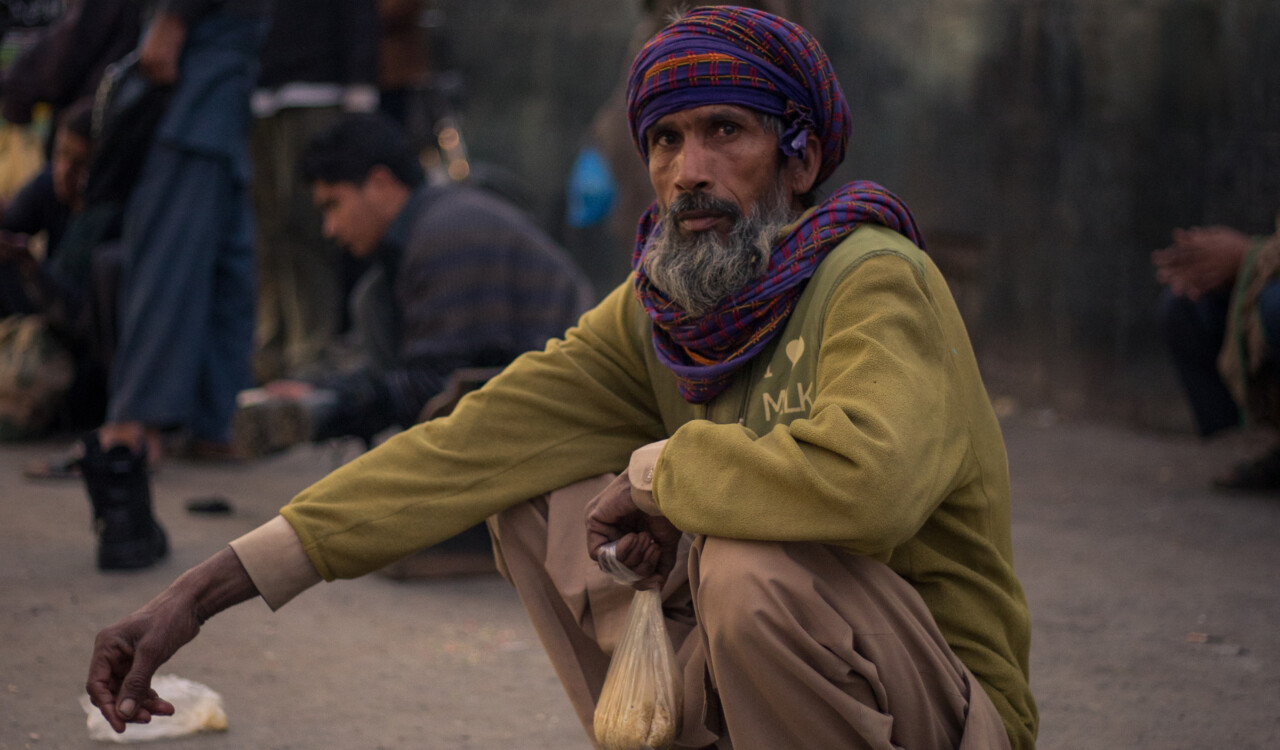
Inflation continues to rise in the country, according to the statistical bureau of Pakistan overall rate of inflation in the country was recorded at 30.16 percent in December, while on a weekly basis inflation also increased by 0.48%. This month (December), food and drink items became more expensive and 19 essential items recorded an increase in prices.
According to economists, devaluation of local currency, high inflation ratio, political instability, and rise in petroleum prices are the most important variables which make the life of a poor man more difficult than ever.
To monitor the situation and dig out the impact of inflation on common people EAT News surveyed the different neighborhoods of Islamabad.
Razia, a 50 years old housemaid, who earns hardly 12 thousand PKR, when she was interviewed about her life, she shared that it is almost impossible for her to bear the daily expenditures. She said, “due to inflation it is not feasible for us to cook meals two times a day, so we eat only once a day. As I am not earning sufficient so life is miserable, and sometimes we feel totally helpless”. She has six children including four daughters and two sons. Her husband died five years ago. Razia said that sometimes leftover food is found in the homes where she works, but it doesn’t happen every day. Milk has become so expensive that she has given up milk tea in the morning and now she makes green tea to feed the children.
Raheel Butt is a middle-class working man whose wife is also a working woman. Mr. Raheel is worried about rising inflation. He told EAT News that earlier he used to go to work by car. After the hike in petrol prices, he now uses a motorbike and works from home a couple of days a week because of the concession given by the office. Raheel Butt is upset about his family, and he is not very much hopeful for his future.
Nadeem Mehmood runs a small factory in Islamabad. He is also disturbed by high inflation. He said, “with the increase in the markup by the banks and other costs, along with the electricity bills, the labor has also started demanding higher salaries. All these factors are increasing their cost of business while on the other hand market conditions are getting worse day by day”.
In Pakistan, the common man is suffering due to inflation mainly because of the increase in the prices of oil products along with the increase in food items. At the end of the first fiscal year of the Pakistan Tehreek-e-Insaf (PTI) government i.e. June 2019, the overall rate of inflation was 8 percent while the increase in food prices was 8.1 percent.
At the end of next year i.e. June 2020, the overall rate of inflation was 8.6 percent and the increase in food prices was 14.6 percent. At the end of June 2021, the overall inflation rate was 9.7 percent, but the increase in food prices was 10.5 percent.
If we look at the inflation rate data before the Pakistan Tehreek-e-Insaf government ended in early April (2022), the inflation rate in the first nine months of the last financial year (from July 2021 to March 2022), was closed at 10.77 percent while if we separately observe the month of March 2022, it closed at 13 percent.
According to food price data, a 48% increase in the price of edible oil, a 35 percent in the price of vegetables, an average of 38 percent in the price of pulses, about a 20 percent in the price of chicken, 23 percent in the price of meat, and 37 percent was seen in the prices of oil products in the same months of last year.
In April 2022, the first month of the Pakistan Muslim League-Nawaz-led coalition government, the inflation rate was recorded at 13.37 percent, which increased to 13.76 percent in May, while the inflation rate reached 21.32 percent in June.
Food data shows that the price of onion rose by 124 percent, edible oil rose by 70 percent, chicken by 47 percent, wheat by 31 percent, and the price of milk by 21 percent. On the other hand, the price of oil products increased by 96% and the price of electricity by 34%.
EAT News interviewed former finance minister Dr. Hafeez Pasha about the price hike in the country, he said, “the overall rate of inflation at the end of the financial year is becoming more than 21 percent and if we look at the history of Pakistan, such a high rate was recorded in 2008 and 1974. If we look at the rate of inflation in the four years of Pakistan Tehreek-e-Insaf and about four months of the current government, the prices of food and beverages have increased by 55%. During this period, the income of plumbers, laborers, electricians, technicians, and mechanics increased by 24 to 27 percent, which means that the prices increased twice as much as the income of the people.
According to the data released by the government of Pakistan, the inflation rate in the country has reached the highest level in fifty years i.e. 30.16%, which means that the sources of revenue of the low-income earners have halved while the noteworthy aspect is that the increase in salaries is negligible.
A large number are flocking to the Eat News for quality news every day, and readers in Taiwan, United States, United Kingdom, India, Japan, France, Pakistan, China, Malaysia and more, now support us financially.
In these chaotic, perilous times, an independent, truth-seeking news organisation like the Eat News is essential. We believe everyone deserves access to trustworthy information. That’s why we choose to keep our reporting open for all readers, regardless of where they live or what they can afford to pay.
The Eat News has no shareholders or billionaire owner, meaning our journalism is free from influence and vested interests – this makes us different. Our editorial independence and autonomy allows us to provide fearless investigations and analysis of those with political and commercial power. We can give a voice to the oppressed and neglected, and help bring about a brighter, fairer future.
If there were ever a time to join us, it is now. You have the power to support us through these volatile economic times and enable our journalism to reach more people, in all countries.
Every contribution, however big or small, makes a difference. Support the Eat News for better reporting.
Support the Eat News ➔


