

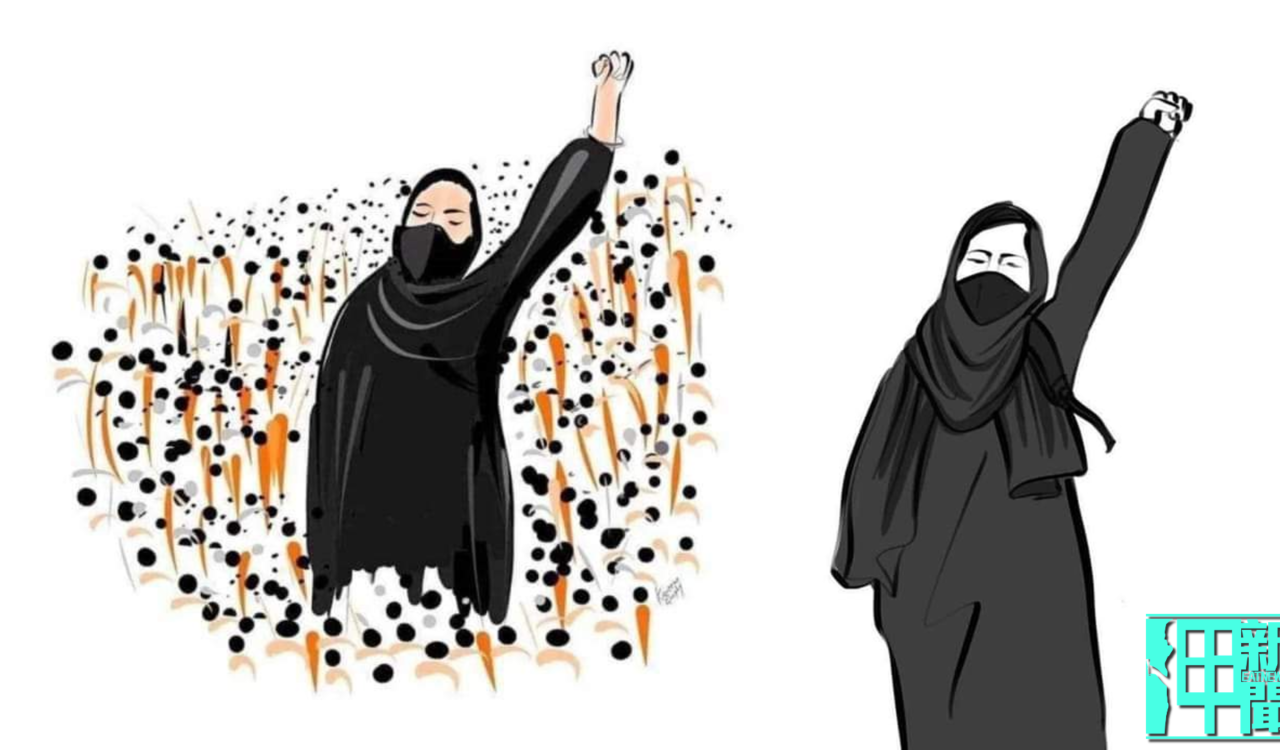
Ban on hijab (headscarves) in some colleges of Southern India has triggered a debate on religious freedom in the country. It started when in December Udupi’s Kundapur PU college in Karnataka (southern India) issued a circular for students to not wear hijab in classrooms for maintaining uniformity. The taken decision was not appreciated by students, right after some students were stopped to enter college because of their hijab. The matter escalated when some students started wearing saffron scarves to protest against the hijab wearing Muslim students. After a clash between students and police in one of the protests in Bengaluru, state administration decided to ban wearing of clothes that oppose equality, integrity and public order until the case is under hearing.
According to the information, the petitioners challenged Karnataka high court’s order on various grounds, some of them are – Article 19(1)(a) of the Indian constitution states to protect expression of wearing a hijab which guarantees freedom of speech and expression. Other says, a student wearing hijab (headscarf) silently while attending class does not disturb public order in any way and is only a profession of their faith. Although in government order, it is mentioned that banning headscarf is not violation of fundamental rights particularly freedom of religion.
Zoya, a medical college student who herself wear hijab discussed her views on the ongoing matter. She told Eat News, ‘I did not appreciate the decision to ban wearing of hijab in college of Karnataka because it is not creating any trouble or hurting anyone’s sentiments. It is a part of our religion that we cannot leave. Few days ago, I heard same kind of incident in one of the colleges of Rajasthan where a warning is been issued to a girl to not wear the hijab. Look how the matter jumped from one part of the country to another. Reason to maintain uniformity in a classroom does not justify to ban hijab, as it is a significant part of our religion.’
On asking can it be called violation of freedom of religion, according to Zoya it is not. She said, ‘Freedom of religion is a fundamental right given by Indian constitution to each and every citizen of India. And connecting hijab ban in particular colleges with violation of religious freedom is not correct. People who are actually fighting for the decision, the petitioners know exactly what is needed and want to be heard. Other people who are a part of crowd in the name of protest just work as a fuel to keep the fire burning. The real motive goes away and violence, narratives are left behind’.
As per the religion census 2011, majority of the population in Karnataka state is Muslim with 12.92 per cent. Victimizing minority community cannot be applied to this current situation. ‘Yes, I agree. The minority community been targeted is not the case this time because maximum population follows Islam there. This the only reason why matter has gone to the court quickly and people are agitated with the decision’, said Zoya. While she is angry and puzzled about the decision of banning hijab, she also agrees that in a protest, most of the times real demands disappears and the whole situation gets twisted. Alongside, Gautam is an engineering student and trying to stay update in the case. According to him, the decision does not hurt any religious sentiments and said, ‘I don’t think it is a matter of protest at all. Here I am not showing fanaticism but since there is a uniform code for everybody directed by college authorities, everybody falls under the category until it’s a rare case.’ He further added, ‘The clash where people with saffron scarves are protesting against the girls’ wearing hijab is unnecessary. Since the matter has already been gone to the court for the hearing, they should wait for the decision. In this case, both the parties are wrong and can trigger religious disputes, which they should keep in mind.’
On political leaders sealed mouth on the matter, Gautam said, ‘It is their responsibility to maintain peace in such situation. instead of avoiding the questions regarding case or keeping mum, it is better to give a statement that could help in calming down the protest or the situation.’ After a senior US official addressed the hijab controversy as a violation of religious freedom, official spokesperson of Indian Ministry of External Affairs, Arindam Bagchi in his statement cleared, ‘motivated comments on our internal issues are not welcome’. The same kind of urgent addressal is what people are waiting for amid disturbed situation in the country.
State administration ordered to reopen schools again that were closed due to the recent matter of banning hijab in the state. Whereas district administration has imposed Section 144 around the nearest areas of Udupi district till 19th February.
A large number are flocking to the Eat News for quality news every day, and readers in Taiwan, United States, United Kingdom, India, Japan, France, Pakistan, China, Malaysia and more, now support us financially.
In these chaotic, perilous times, an independent, truth-seeking news organisation like the Eat News is essential. We believe everyone deserves access to trustworthy information. That’s why we choose to keep our reporting open for all readers, regardless of where they live or what they can afford to pay.
The Eat News has no shareholders or billionaire owner, meaning our journalism is free from influence and vested interests – this makes us different. Our editorial independence and autonomy allows us to provide fearless investigations and analysis of those with political and commercial power. We can give a voice to the oppressed and neglected, and help bring about a brighter, fairer future.
If there were ever a time to join us, it is now. You have the power to support us through these volatile economic times and enable our journalism to reach more people, in all countries.
Every contribution, however big or small, makes a difference. Support the Eat News for better reporting.
Support the Eat News ➔


